The Evolution Of Cardboard Sci Fi Art
History Of Cardboard Modeling
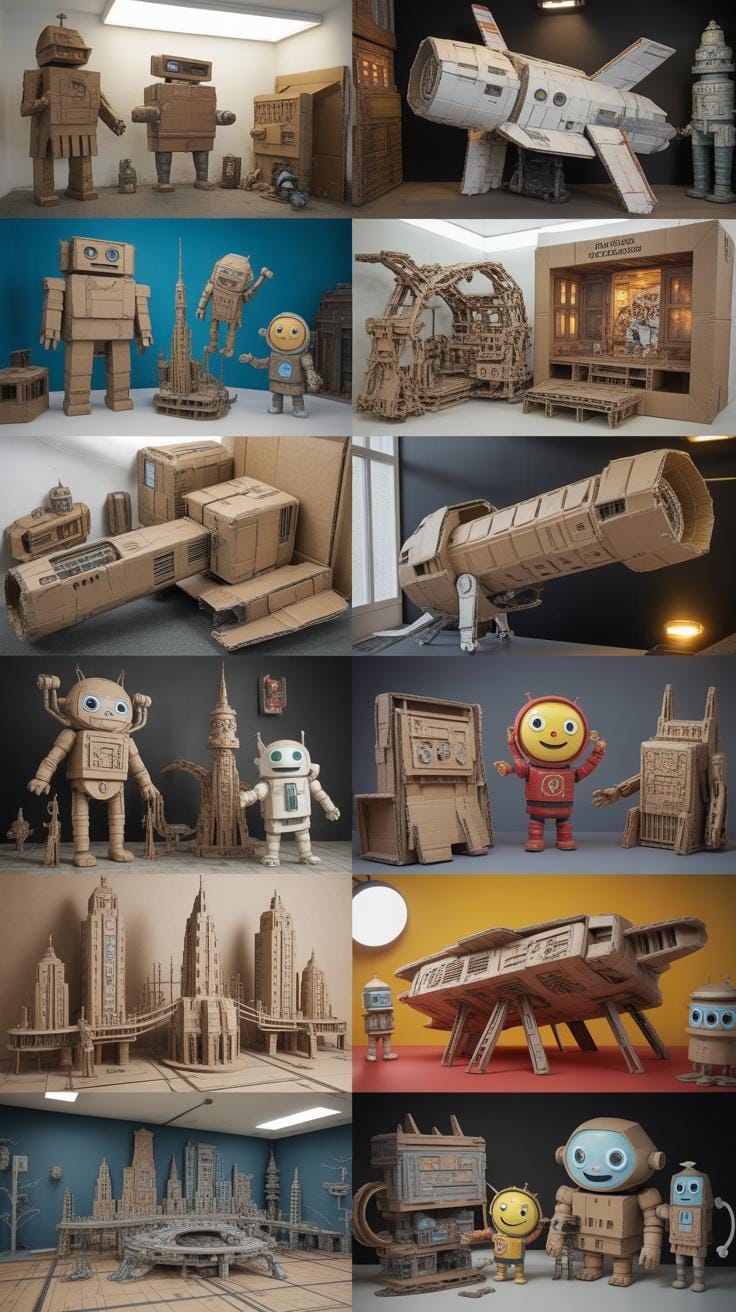
Cardboard modeling emerged as a practical craft during the post-World War II era when paper engineering became increasingly refined. Industrial designers and architects utilized cardboard prototypes to visualize concepts before committing resources to final production. These humble beginnings established cardboard as a legitimate medium for three-dimensional artistic expression. What began as utilitarian mockups gradually transformed into recognized artistic practice throughout the late twentieth century.
The transition from functional prototyping to fine art accelerated during the contemporary art movement of the 1980s and beyond. Artists began recognizing cardboard’s sculptural potential, textural richness, and environmental significance. This shift democratized sculpture, making three-dimensional art more accessible to creators without access to expensive materials. Cardboard Sci-Fi Art emerged from this convergence, where imaginative visionaries discovered the medium’s capacity for constructing elaborate futuristic landscapes and extraterrestrial narratives.
From Cereal Boxes To Fine Art
Household cardboard packaging represents an underutilized treasure trove for artistic innovation. Cereal boxes, shipping containers, and paper tubes possess inherent structural integrity while maintaining surprising sculptural flexibility. Contemporary artists recognized that discarded packaging materials could be transformed into sophisticated science fiction compositions without expensive material investments. This realization sparked a creative revolution where everyday refuse became the foundation for extraordinary imaginative works exploring cosmic themes and technological futures.
The transformation of consumer packaging into museum-quality Cardboard Sci-Fi Art demonstrates profound shifts in artistic philosophy and environmental consciousness. Artists meticulously layer, carve, and construct intricate details that rival traditional sculptural mediums in complexity and visual impact. By elevating waste materials to artistic prominence, creators simultaneously challenge aesthetic conventions and promote sustainability awareness. This approach has attracted gallery attention and collector interest, validating cardboard as a serious medium capable of conveying complex narratives about space exploration, alien civilizations, and technological possibilities.
Essential Tools For Galactic Cardboard Reliefs
Precision Cutting Instruments
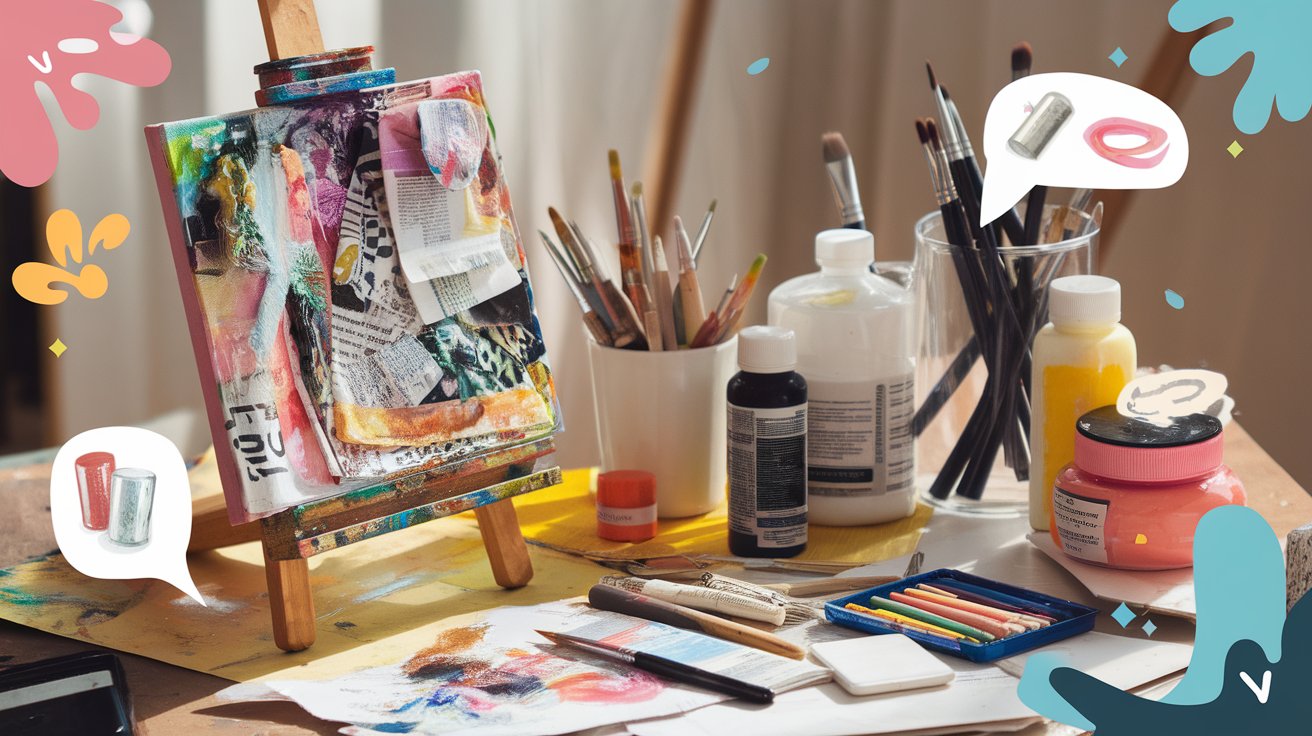
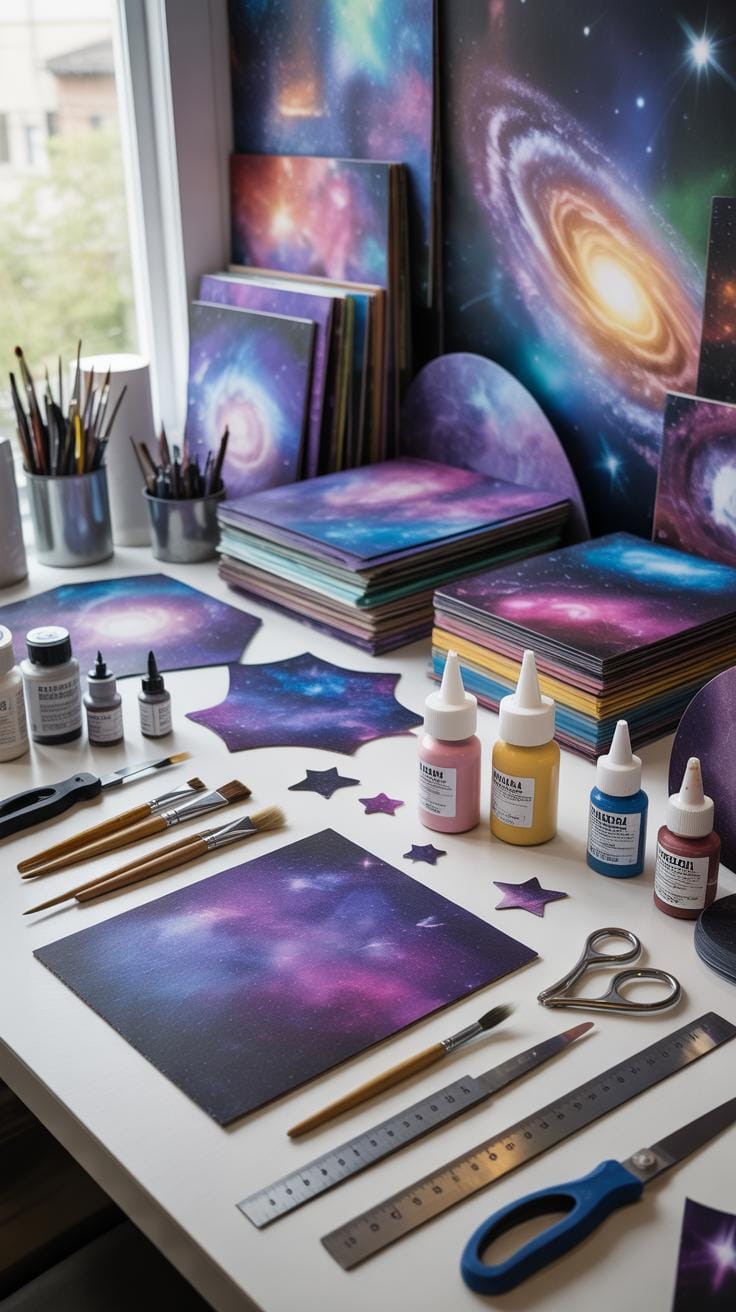
Creating intricate spacecraft and cosmic landscapes in cardboard sci-fi art demands tools that deliver clean, controlled cuts through layered materials. Hobby knives with interchangeable blades offer exceptional precision for detailed spaceship detailing, allowing artists to carve windows, hull plating, and dimensional features with remarkable accuracy. The beveled edges these instruments create catch light beautifully, enhancing the three-dimensional illusion of your galactic scenes. Rotary cutters provide smooth, circular cuts essential for planet-like elements and porthole designs, while their ergonomic handles reduce hand fatigue during extended creative sessions.
Quality cutting instruments transform cardboard from a flat, ordinary material into architectural elements worthy of serious artistic consideration. Maintain sharp blades consistently, as dull edges compress cardboard fibers rather than severing them cleanly, resulting in ragged edges that diminish your cosmic composition. Cutting mats beneath your work protect surfaces and provide essential give that allows blades to slice efficiently through multiple cardboard layers. Investing in professional-grade tools elevates your cardboard sci-fi art from amateur hobby to gallery-worthy relief sculpture.
Adhesives And Structural Integrity
The longevity of your cardboard sci-fi art depends entirely on adhesive selection, as poor bonding causes magnificent galactic dioramas to deteriorate or collapse over months or years. Wood glues penetrate cardboard fibers deeply, creating molecular-level bonds that withstand temperature fluctuations and humidity changes common in home environments. These adhesives cure to neutral colors, remaining invisible within your layered compositions while providing strength comparable to professional museum-quality construction techniques used in conservation.
Hot melt adhesives offer rapid assembly benefits crucial when you’re constructing complex, multi-layered spacecraft and station designs. Their immediate grip allows you to position components precisely without lengthy clamping periods, though they work best for secondary reinforcement rather than primary structural support. Apply adhesives sparingly and strategically; excess glue seeps between layers, creating unsightly stains and weakening the delicate cardboard matrix. Combine both adhesive types thoughtfully—wood glue for foundational strength and hot melt for tactical positioning—ensuring your elaborate cardboard sci-fi art reliefs endure as permanent showpieces.
Mastering The Relief Technique In Sci Fi Design
Layering For Three Dimensional Depth
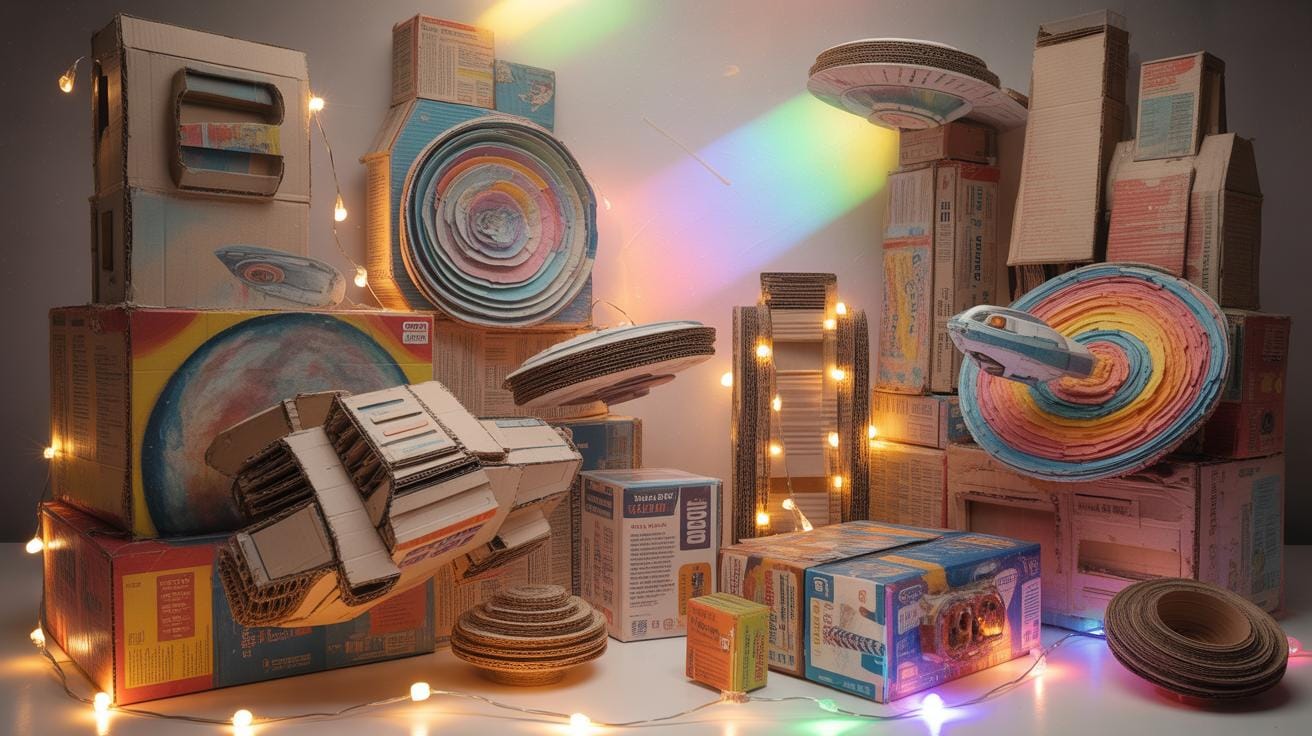
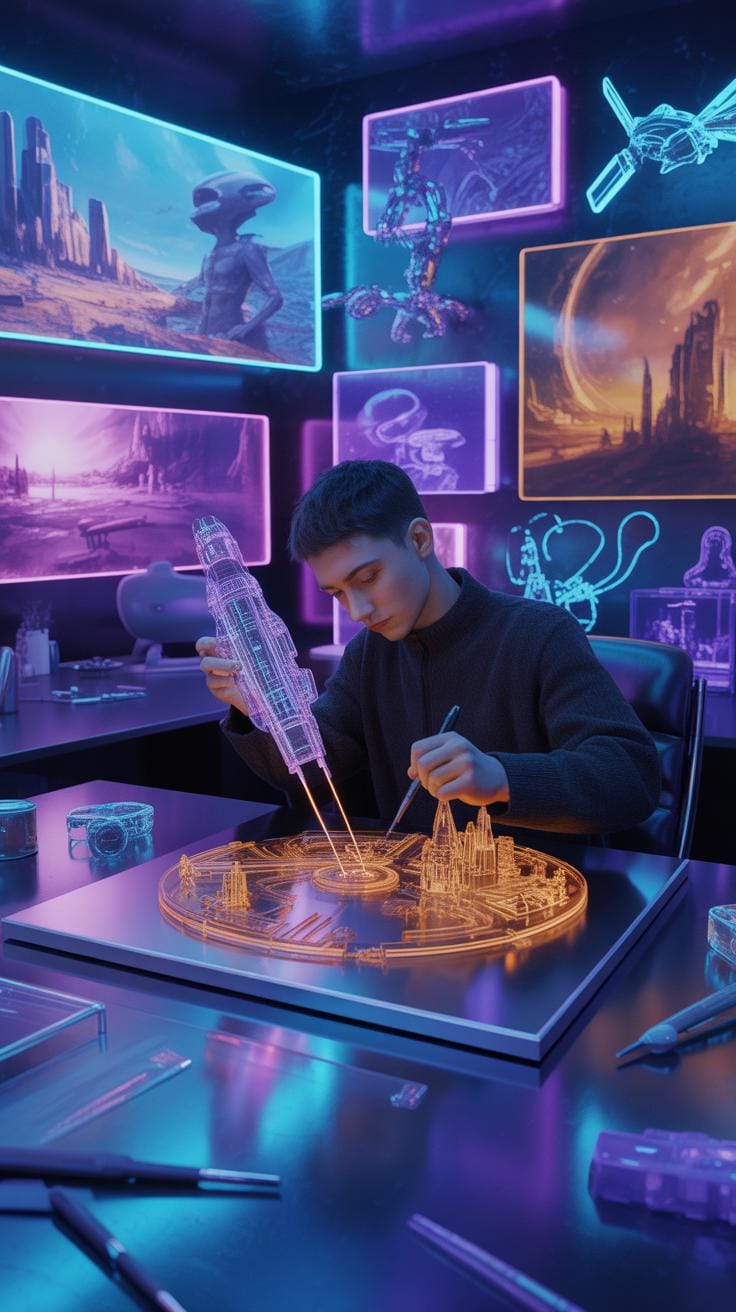
The foundation of compelling Cardboard Sci-Fi Art lies in understanding how layered corrugated board creates genuine dimensional space. By strategically stacking sheets of varying thicknesses, artists build planetary surfaces with authentic high and low relief elements. Each layer adds shadows and highlights naturally, mimicking how light would interact with actual three-dimensional terrain. This technique transforms flat material into landscapes that seem to breathe and undulate.
Building depth requires planning your composition before cutting and adhering layers together. Consider how each stacked element will cast shadows across surfaces below, creating visual drama without additional painting. The corrugated board’s natural weight allows secure stacking without elaborate adhesives when properly aligned. Professional Cardboard Sci-Fi Art artists often create templates to ensure precision across multiple layers, preventing misalignment that disrupts the illusion of depth and making subsequent weathering effects appear more authentic.
Creating Textural Contrasts
The natural ribbing of corrugated cardboard becomes an artist’s greatest asset when simulating mechanical components and otherworldly landscapes. By strategically exposing or manipulating the internal fluting, creators achieve surface variations that suggest metallic plating, circuit pathways, or alien geological formations. This inherent texture requires minimal additional treatment, allowing the material’s honest character to enhance the science fiction narrative within Cardboard Sci-Fi Art.
Effective texture work combines exposed ribbing with strategic cuts and layering to suggest dimensionality and function. Artists sand certain areas smooth while leaving others rough, creating visual rhythm across spacecraft hulls or extraterrestrial terrain. The direction of exposed fluting can guide viewers’ eyes across compositions, emphasizing movement or structural importance. Weathering techniques applied to textured surfaces reveal underlying layers, suggesting age and cosmic exposure while maintaining the sustainable beauty inherent to cardboard as a sculptural medium.
Designing Iconic Spacecraft And Stations
Geometry Of The Stars
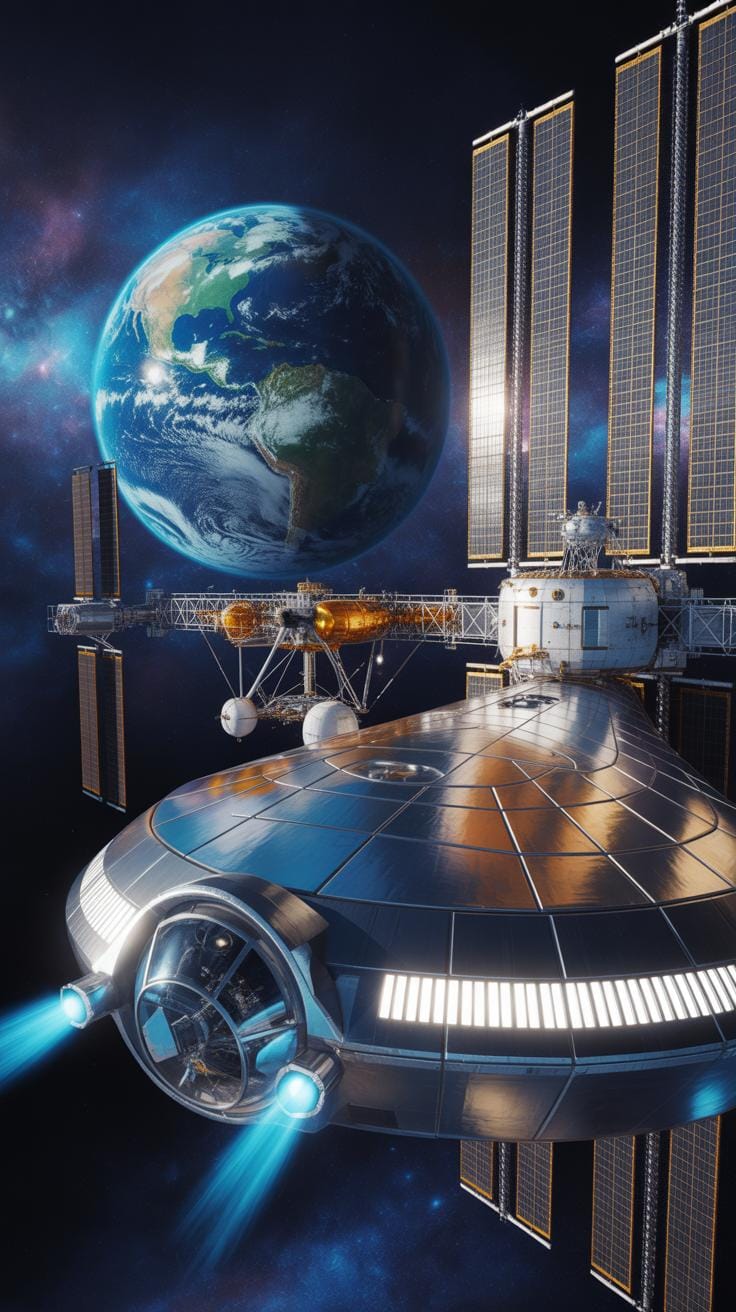
The foundation of compelling cardboard sci-fi art rests upon understanding how to deconstruct complex spacecraft into fundamental geometric forms. Cylinders become fuselages, cones transform into nose cones, and stacked rectangular boxes form towering space stations. By studying iconic starship designs from science fiction literature and film, artists can identify the core shapes that define a vessel’s silhouette. This geometric approach makes ambitious projects feel manageable, allowing creators to build impressive three-dimensional cardboard reliefs without requiring advanced sculpting experience or expensive materials.
Once basic shapes are established, layering becomes the transformative technique. Multiple cardboard sheets stacked and offset create depth perception and dimensional drama that elevates a flat design into genuine relief sculpture. The negative space between layers catches shadows, enhancing the illusion of mechanical complexity. Beveled edges and angled cuts amplify this effect further. This methodology proves especially effective for creating dramatic dreadnoughts, elegant cruisers, and alien architecture that seems to exist in genuine three-dimensional space rather than merely suggesting it.
Detailing With Found Materials
Greebling—the practice of adding intricate mechanical details to spacecraft surfaces—transforms basic cardboard shapes into believable vessels bristling with technological authenticity. Cardboard scraps become hull plating, sensor arrays, engine ports, and structural elements when artists embrace creative repurposing. Corrugated cardboard’s ridged texture naturally suggests mechanical ribbing and reinforcement panels. Toilet paper tubes, cereal box edges, and packaging materials provide varying textures and dimensions that accumulate into visually rich surfaces. This resourceful approach defines modern cardboard sci-fi art, proving that limitation breeds remarkable creativity.
The beauty of greebling with found materials lies in the visual storytelling it enables. Each added element suggests function and purpose, creating narratives without words. A cluster of small cylindrical tubes suggests engine complexity; layered rectangular pieces imply armor plating or cargo containers. Artists can source materials from recycling bins, making this technique environmentally conscious while remaining economically accessible. The resulting pieces possess genuine charm and character that commercial or digital designs often lack, celebrating imperfection as authentic artistic expression rather than limitation.
Texture And Weathering For A Cinematic Look
Priming The Porous Surface
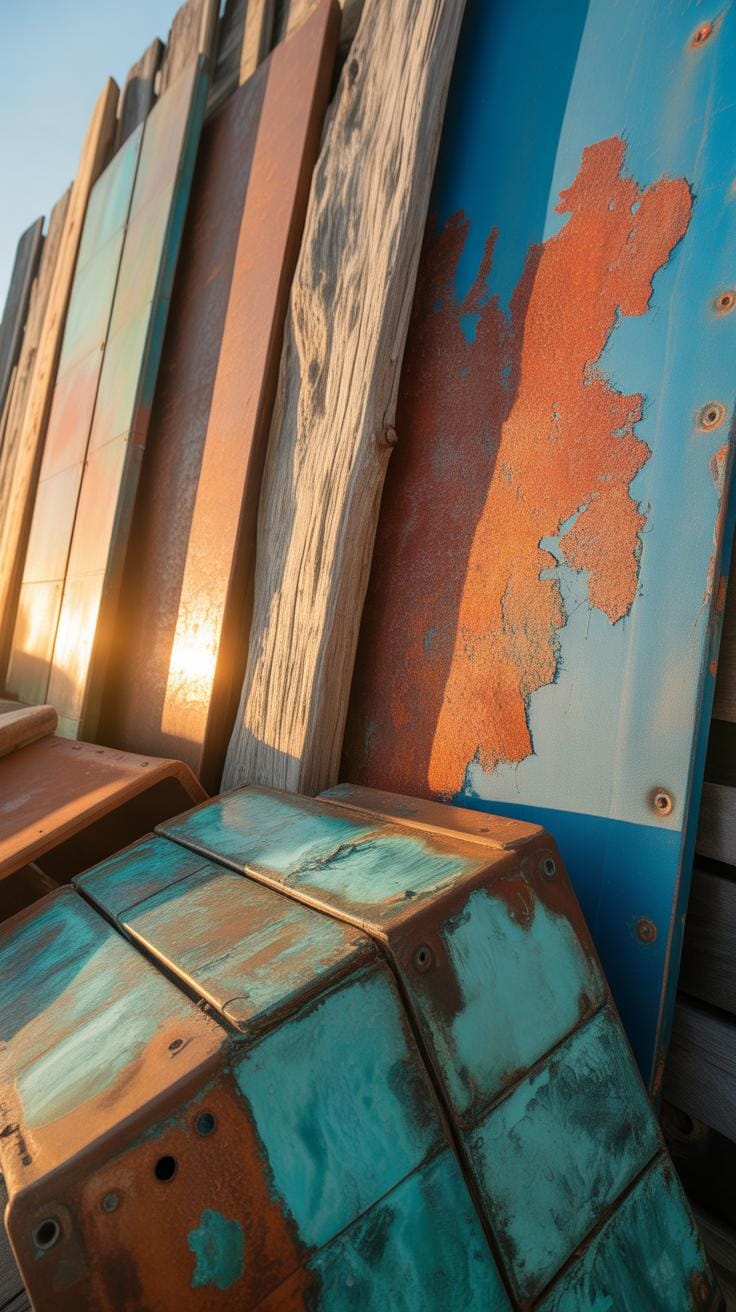
Cardboard’s inherent porosity presents both challenge and opportunity for cardboard sci-fi art creators. The material absorbs paint unevenly, creating muddy finishes that undermine the cosmic vision. Priming seals the surface, allowing paints to adhere uniformly and reveal their true metallic and iridescent qualities. Gesso, a traditional primer favored by fine artists, works exceptionally well on cardboard structures. Apply thin, even coats, allowing complete drying between applications to prevent warping and ensure a stable foundation.
The priming process transforms cardboard from a humble craft material into a professional-grade canvas. Multiple primer layers create dimensional depth, enhancing subsequent paint applications. Quality primer also prevents paint from bleeding through weaker cardboard areas, maintaining crisp details across your galactic creation. Consider using acrylic-based primers for their quick drying times and compatibility with most paints used in cardboard sci-fi art projects.
Battle Damage And Aging Effects
Simulating authentic spacecraft wear requires thoughtful distressing techniques that evoke genuine cosmic deterioration. Dry brushing metallic paints over darker base layers creates convincing hull scarring and oxidation patterns. Controlled tearing along edges produces organic damage lines impossible to achieve through painting alone. Strategic burn marks applied carefully with heat sources add dramatic realism, though this demands extreme caution and proper ventilation. These weathering effects transform flat cardboard surfaces into tactile narratives of interstellar journeys.
Cosmic dust accumulation becomes visible through layered dry brushing with browns, grays, and subtle purples across textured zones. Allow dried paint layers to show through intentional scuffs and scratches, revealing the color history of your cardboard sci-fi art. Stippling techniques using sponges create pitted surfaces resembling meteor impacts and radiation scarring. The interplay between pristine metallic details and weathered regions suggests a vessel battling through hostile space, grounding your imaginative creation in visual authenticity and tactile intrigue.
Lighting Your Cardboard Cosmos
Integrating LED Electronics
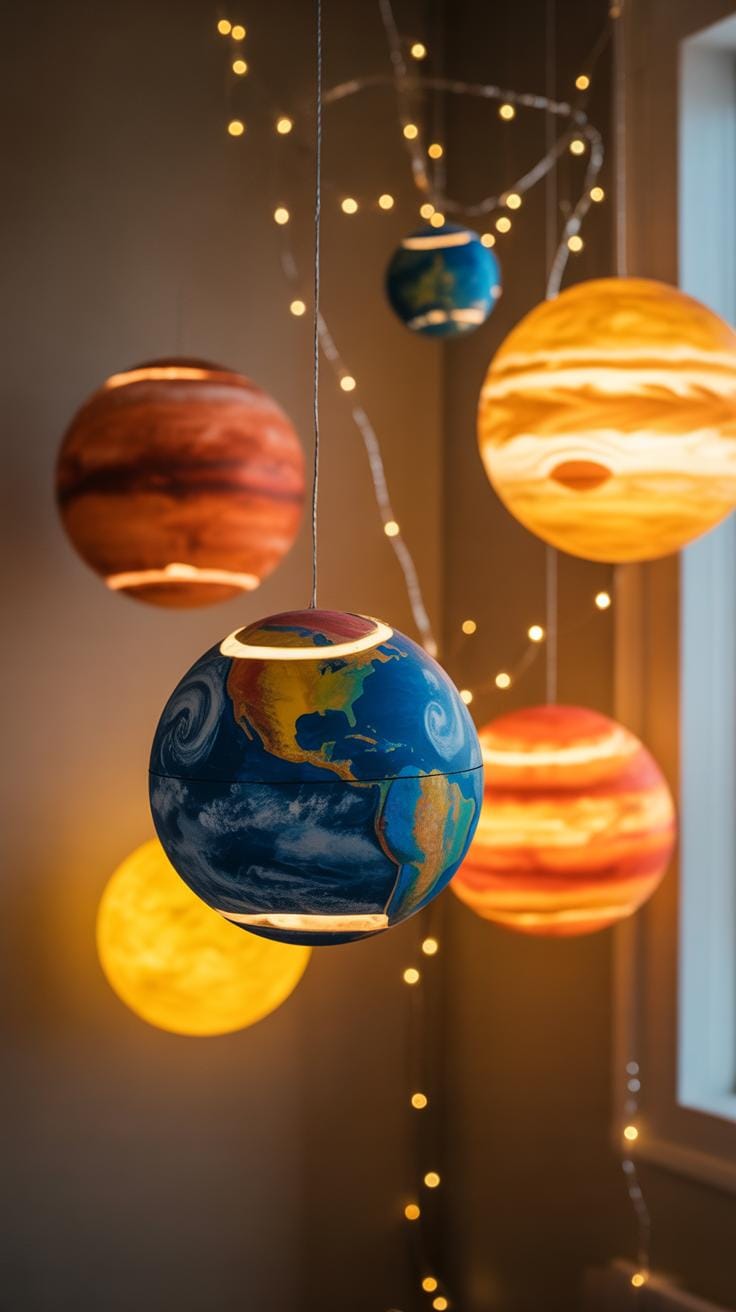
Transforming cardboard sci-fi art with embedded lighting requires thoughtful planning and strategic placement. The layered construction of cardboard reliefs naturally creates hollow spaces perfect for concealing modern electronics. By carefully routing thin LED strips through the interior channels between glued layers, you maintain the artwork’s clean aesthetic while adding dramatic illumination. Thin-gauge wiring can be sandwiched between cardboard sheets, emerging only where needed for light-emitting elements. This approach preserves the handcrafted integrity of your piece while embracing contemporary technology.
Battery compartments work best when positioned at the back or sides of your cardboard sci-fi art installation, where they remain completely hidden from viewer perspective. Consider using adhesive-backed LED strips that conform to curved surfaces and interior edges. Small rechargeable battery packs can be nestled into reinforced cardboard pouches, with charging ports accessible from behind. Secure all wiring with hot glue or craft adhesive to prevent movement that might compromise connections. Test all electrical components thoroughly before final assembly to ensure reliable operation and safe functionality throughout your artwork’s display life.
From the humble cardboard of a cereal box, dreams launch into sci-fi epics, reminding us that grand galactic adventures await in the simplest materials of childhood wonder.
Fiber Optics For Starfield Effects
Fiber optic strands offer an enchanting solution for creating realistic distant galaxies within cardboard sci-fi art installations. These hair-thin light conductors can be threaded through pre-drilled holes in your cardboard layers, creating glowing points that mimic distant stars. The light travels through the fiber’s core, emerging as small luminous dots scattered across your cosmic scene. Multiple fiber bundles can be positioned at varying depths within the relief, creating convincing three-dimensional starfield effects. This technique produces an authentic, dreamlike quality that captures the wonder of galactic exploration.

Securing fiber optic strands requires minimal adhesive to maintain their flexibility and light-conducting properties. Bundle fibers together at entry points using small cable ties or craft tape, then route them through your cardboard structure toward a central light source positioned behind the artwork. Trim individual fibers to appropriate lengths, allowing tips to protrude slightly through the cardboard surface for maximum luminescence. Experiment with different fiber diameters and bundle densities to achieve varied star brightness. When properly installed, fiber optics create an immersive window into distant cosmos, transforming ordinary cardboard into a mesmerizing astronomical display.
Notable Artists In The Cardboard Sci Fi Scene
Contemporary Pioneers
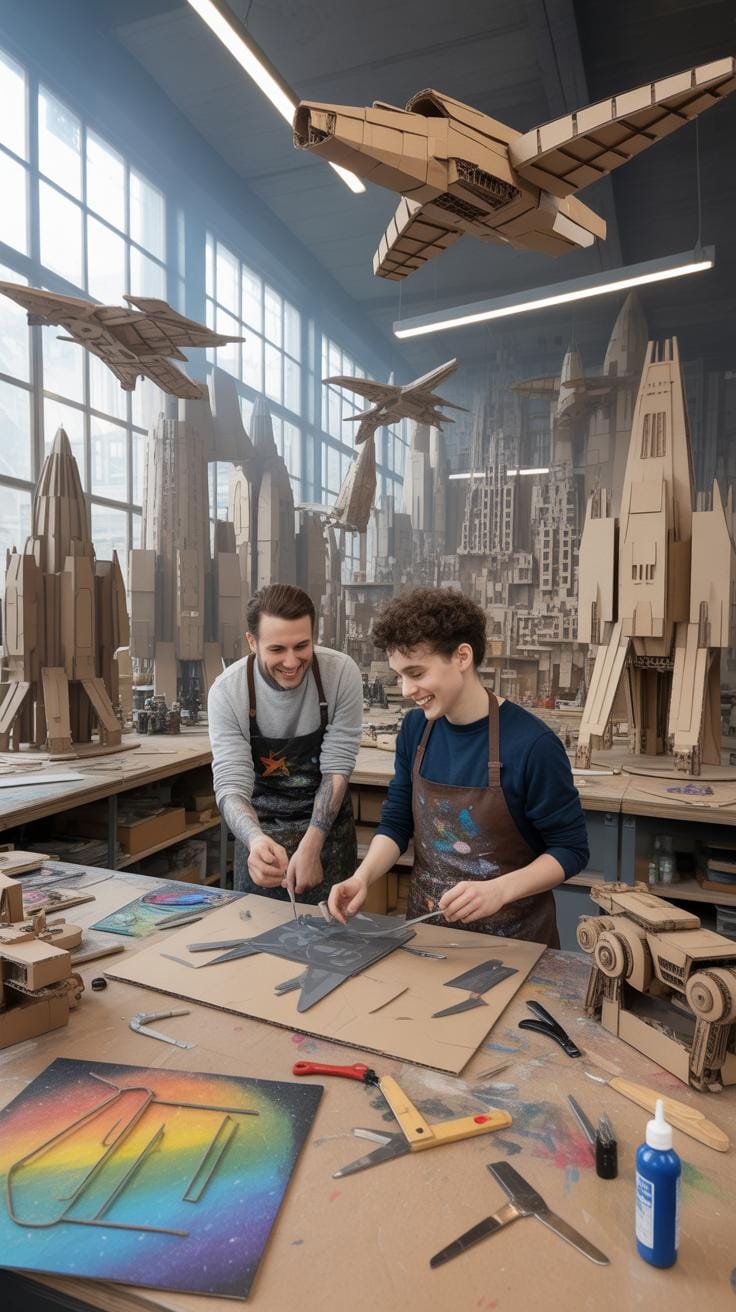
The cardboard sci-fi art movement has attracted visionary creators who challenge traditional sculpture materials and methods. These artists demonstrate that humble corrugated cardboard possesses remarkable potential for sophisticated artistic expression. By layering, carving, and assembling cardboard with meticulous precision, they’ve created intricate spacecraft, alien landscapes, and futuristic structures that rival gallery installations. Their work has legitimized Cardboard Sci-Fi Art as a serious medium worthy of museum exhibition and critical attention.
These pioneers employ various techniques including hand-cutting, laser engraving, and three-dimensional relief construction to achieve dimensional depth and visual complexity. Many combine cardboard with complementary materials like paint, metallic finishes, and lighting elements to enhance their sci-fi narratives. Their commitment to environmental consciousness resonates strongly, as cardboard offers a sustainable alternative to traditional sculpture materials while maintaining artistic integrity. Through dedication and innovation, these artists have fundamentally transformed perceptions about what cardboard can accomplish as a creative medium.
Community And Collaborative Projects
Online platforms have fostered thriving communities where cardboard model enthusiasts connect, share techniques, and celebrate collaborative builds. Social media groups and dedicated forums showcase elaborate group projects where members contribute individual cardboard components toward massive collective installations. These communities democratize Cardboard Sci-Fi Art by welcoming artists of all skill levels and backgrounds. The collaborative spirit encourages experimentation, knowledge-sharing, and the emergence of new artistic voices within the movement.
Major collaborative projects often feature participants from multiple countries working simultaneously on different sections of expansive sci-fi dioramas and architectural structures. Community members exchange templates, construction tips, and design inspiration while maintaining individual creative autonomy within collaborative frameworks. These shared endeavors have generated substantial cultural impact, attracting media attention and inspiring educational programs in schools worldwide. The collective enthusiasm demonstrates that Cardboard Sci-Fi Art thrives through connection, supporting both established artists and emerging talents seeking community validation.
Preserving And Displaying Your Paper Masterpiece
Environmental Protection Strategies
Cardboard Sci-Fi Art requires thoughtful environmental management to maintain its visual impact and structural integrity over time. Humidity presents the primary threat to layered cardboard reliefs, as excessive moisture can cause warping, delamination, and mold growth. Conversely, extremely dry conditions may cause brittleness and cracking. Maintaining relative humidity between forty and fifty-five percent creates an ideal stable environment for your dimensional artwork.
UV light exposure gradually fades the vibrant colors and surface details that make cardboard Sci-Fi Art visually compelling. Direct sunlight accelerates this degradation, transforming rich hues into pale shadows within months. Consider these protective measures for your treasured pieces:
- Install UV-filtering glass or acrylic panels in display frames
- Position artwork away from direct sunlight and harsh artificial lighting
- Use acid-free backing materials to prevent chemical deterioration
- Maintain consistent temperature to prevent expansion and contraction cycles
- Store pieces in climate-controlled spaces when not displayed
- Apply archival-quality protective coatings designed for paper-based materials
Rotating displayed pieces periodically allows different sections of your collection to rest from light exposure while sharing the full range of your creative vision with viewers.
Framing And Mounting Reliefs
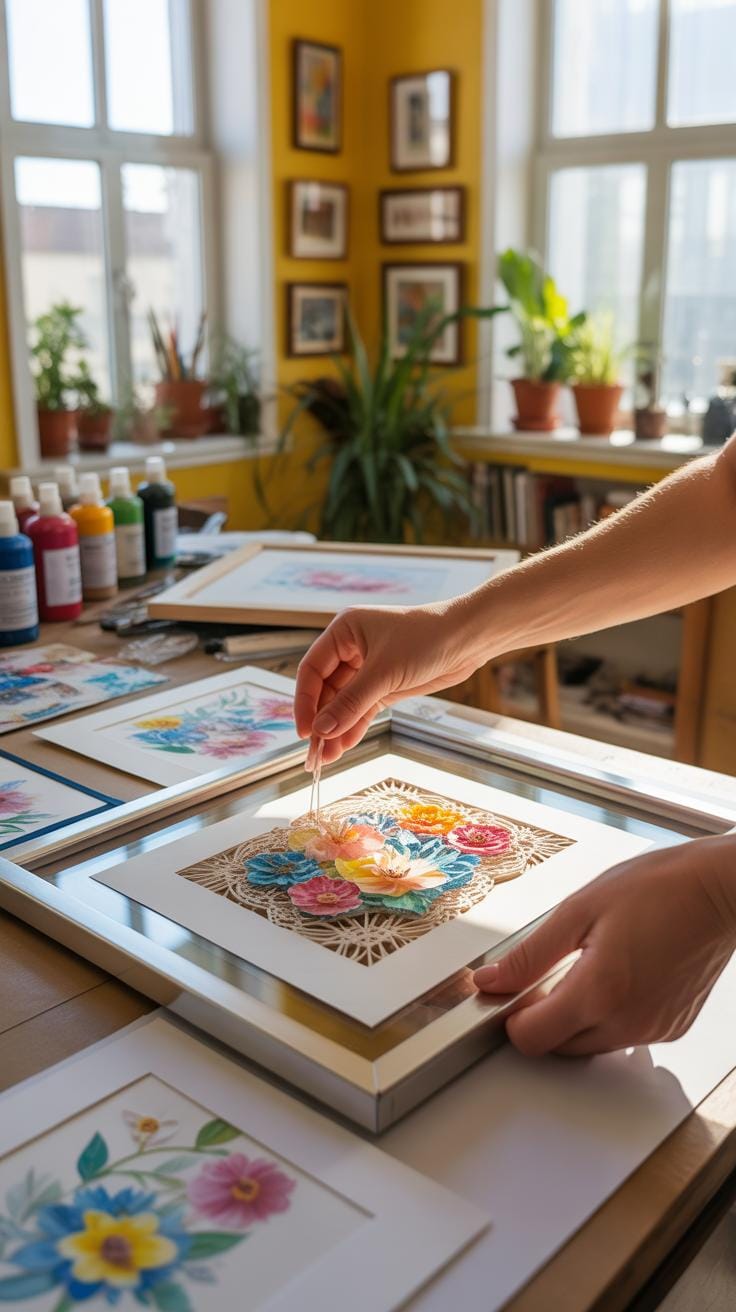
Multi-layered cardboard reliefs demand robust mounting solutions that accommodate their weight and three-dimensional complexity. Traditional picture frames often lack the depth and structural support these bold artworks require. Shadow boxes with substantial internal space provide ideal environments, allowing reliefs to breathe while offering protective enclosure from dust and accidental damage.
For permanent wall installation, invest in heavy-duty mounting hardware rated for weight significantly exceeding your artwork’s actual mass. Properly anchored support systems distribute stress evenly across dimensional layers, preventing sagging or separation over time. Professional installation ensures your Cardboard Sci-Fi Art displays safely and maintains its intended visual perspective for years to come.
Frequently Asked Questions

What is cardboard sci-fi art?
Cardboard sci-fi art transforms everyday cereal boxes and shipping materials into stunning relief sculptures inspired by galactic adventures and futuristic worlds. This creative niche takes simple cardboard and elevates it to epic proportions, mimicking spaceship panels, alien landscapes, and interstellar heroes. It’s a playful fusion of recycling and imagination, perfect for home decor enthusiasts seeking unique, story-driven pieces that spark wonder in any room.
How can I start making my own cardboard sci-fi art?
Begin with gathering sturdy cardboard from boxes, then sketch your sci-fi vision—like a spaceship or nebula—onto it. Cut layers carefully with a craft knife, stack and glue them for dimension, and paint with acrylics for galactic glow. Add details like LED lights for extra flair. This hands-on process lets you craft personalized cardboard sci-fi art, turning recyclables into wall-worthy masterpieces with basic supplies.
Is cardboard sci-fi art budget-friendly and accessible for beginners?
Absolutely—cardboard sci-fi art is one of the most affordable creative outlets, using free or recycled materials you likely have at home. No fancy tools needed; start with scissors, glue, and paint under $20 total. It’s highly accessible for all skill levels, with online tutorials guiding you from simple shapes to complex galactic scenes, making pro-level decor without breaking the bank.