
A Tutorial for Drawing Realistic Hair
Drawing hair can be tricky if you don’t have the right techniques and tools. This article covers a drawing hair tutorial with essential art tools and drawing techniques to help you create realistic hair in your artwork. Whether you are a beginner or an experienced artist, having a clear understanding of hair structure and the way to draw different textures can improve your drawings.
You will learn about selecting the best tools for hair drawing, the steps to follow for natural-looking hair, and tips to avoid common mistakes. These chapters will guide you in enhancing your skills and bring your portraits to life with detailed hair rendering.
Drawing Hair Tutorial
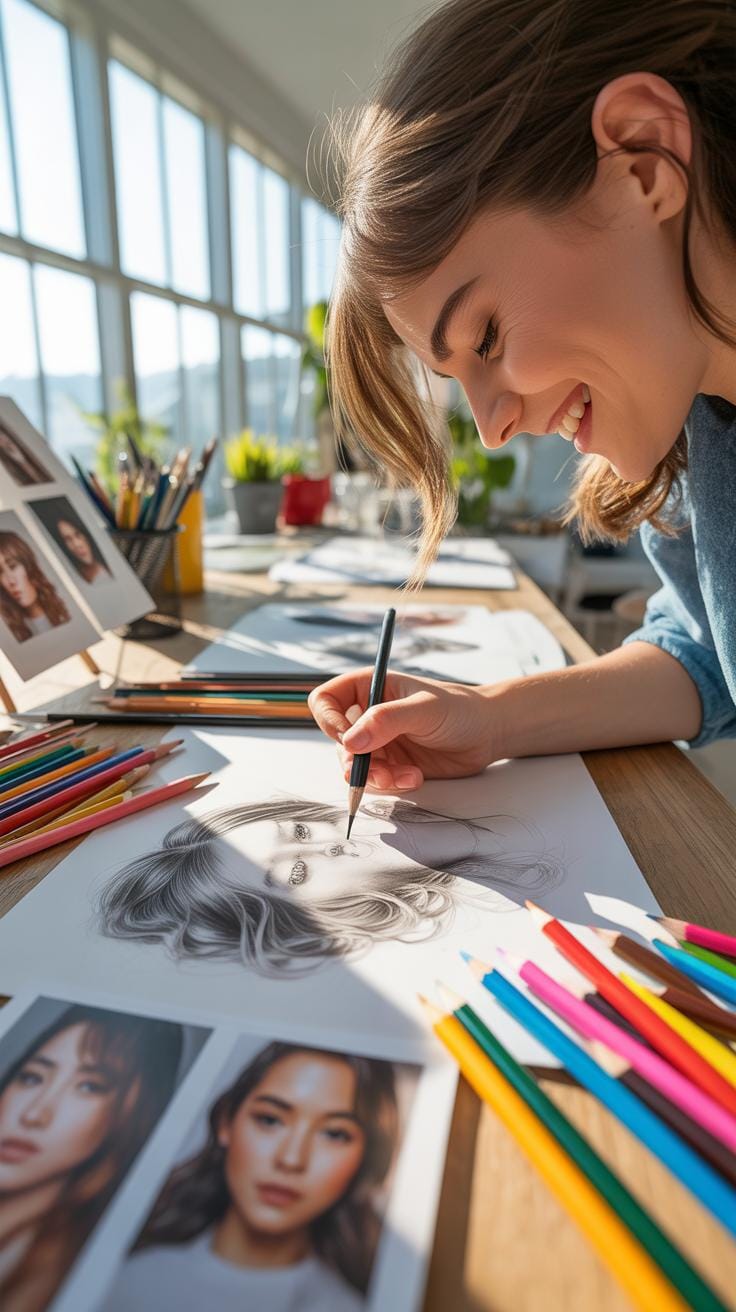
Drawing hair realistically involves more than just sketching lines; it’s about capturing the natural flow and texture that hair possesses. Start by observing how hair grows from the follicles—hair doesn’t just sprout straight out but follows a natural curve and direction based on the scalp’s shape and follicle placement. This is why looking closely at reference images is crucial before you begin.
To approach the drawing, break hair down into sections or locks rather than individual strands. Trying to draw every single hair strand can quickly become overwhelming and make your artwork look unnatural or busy. Instead, focus on the volume and shape first, sketching broad curves that mimic the overall flow. Then, gradually add layers: you begin with light strokes to build up the basic form, adding darker and more defined lines as you refine the hair’s texture.
Stroke direction plays a significant role—always follow the natural wave or fall of the hair. Using varied pencil pressure helps create depth, where softer strokes can indicate lighter areas or highlights, and heavier pressure emphasizes shadows or dense hair patches. Don’t be afraid to erase or lift graphite gently to create highlights, as this mimics the way light interacts with hair’s cuticle surface.
Remember, hair has a complex structure—its cuticle’s overlapping scales reflect light differently depending on the angle. At times, you may find yourself unsure whether to add individual strands or emphasize broader strokes. Both techniques have their place, and sometimes blending them yields the most convincing results. Experiment with layering, pressure control, and direction, and don’t lose patience if the process feels slow—drawing hair demands subtlety and practice.
How To Draw Different Hair Styles
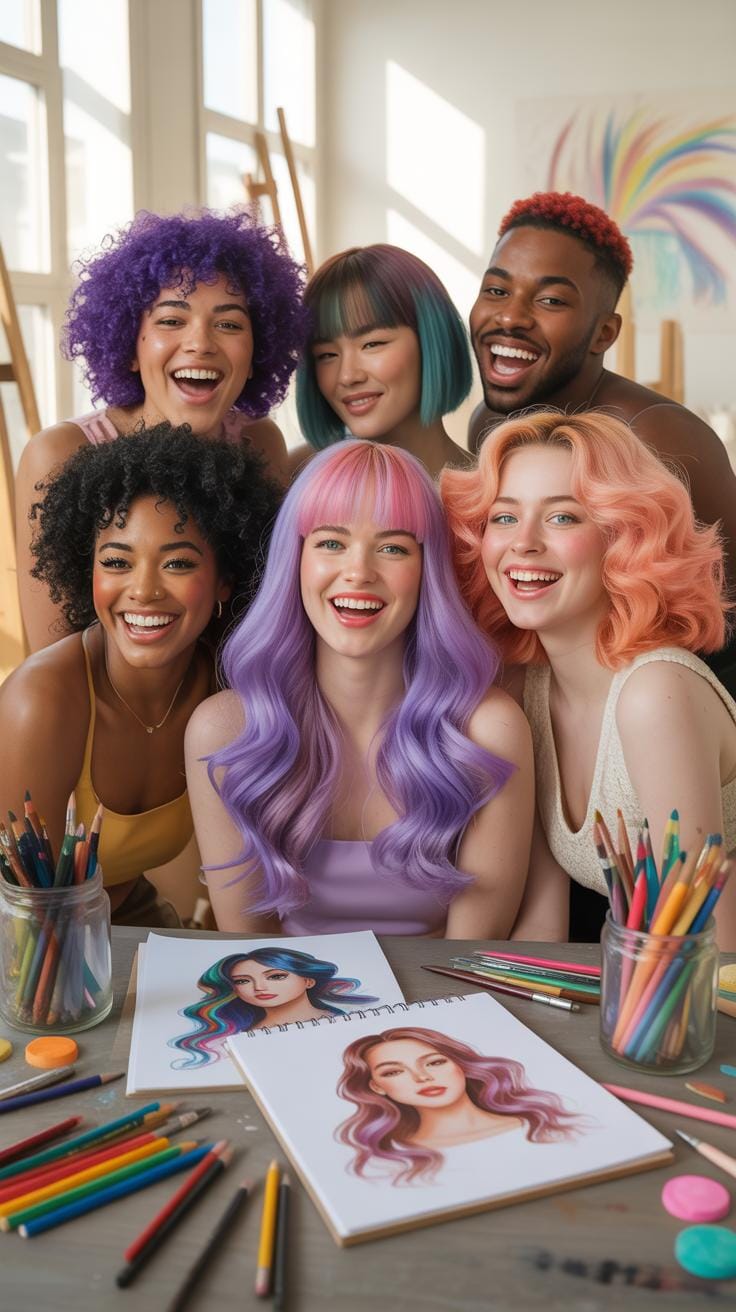
Drawing hair involves understanding the unique characteristics of each hairstyle — straight, wavy, curly, or short. Each type has its own texture, volume, and flow, which affect how you sketch it. Straight hair often appears sleek and smooth, so your strokes might be longer and more controlled, following the flow of the strands. Wavy hair incorporates gentle curves — think of light, rhythmic waves that demand more variation in your lines.
Curly hair is a different beast entirely. The texture is denser, and the volume tends to be larger. You’ll want to focus on capturing those tight loops and spirals, which means your strokes should be shorter, more overlapping, and sometimes irregular. It can be tempting to overwork this, but leaving some gaps within curls lets the hair breathe on the page.

Short hair brings its own challenges. Edges are sharper and more defined — no endless strands flowing down. You need to suggest volume with fewer lines, so shading plays a bigger role. Long hair, in contrast, demands patience to show smooth flow and overlapping layers without turning into a flat shape. It’s like drawing a river of strands rather than distinct clumps.
Examples to try include:
- Sleek, straight hair falling over shoulders.
- Wavy hair loosely tousled, with flowing S-shaped lines.
- Curly hair packed with tight looped strokes that suggest springiness.
- Short pixie cut with sharp shadows to suggest texture and volume.
Have you noticed how even within one hairstyle, subtle differences in flow and light can transform the whole look? There’s no one size fits all here; experimenting with textures and observing how hair behaves in real life really helps improve your drawings.
Techniques For Straight Versus Curly Hair
When drawing straight hair, your strokes should follow a consistent direction, emphasizing smoothness and shine. Long, flowing lines work well here. Shading tends to be more uniform, highlighting the linearity and sleek surface. Don’t forget to break the strands into manageable sections to avoid a stiff or unnatural look.
Curly hair, on the other hand, demands an entirely different approach. You need to embrace chaos a little — curls twist and overlap unpredictably, so your strokes should be shorter, more varied in direction, and often coiled. Shading curls involves alternating light and shadow within tight spaces to define those volume pockets and depth. It’s really about creating texture rather than gloss.

Try comparing a portrait with straight hair next to one with ringlets; the difference in stroke pattern and how shading follows the hair form is quite revealing. I find curly hair a bit more forgiving—you can get away with looser lines, as they add to the natural untidiness of curls.
Drawing Short Hair Versus Long Hair
Short hair requires a compact approach. Since the strands are closer to the scalp, you have to pay attention to the hair edges and how they shape the head’s contour. Shadows are crucial here because you often have fewer strokes to convey volume and texture. Crisp, directional shading helps define short haircuts, especially pixie or crew cuts.
Long hair is more about fluidity. Your challenge lies in capturing movement and flow without getting overwhelmed. Use sweeping, continuous lines to simulate the hair’s path as it falls. Highlight overlaps and layers, but avoid drawing every strand. Blending and soft shadows become important to create that smooth cascade effect.
In summary, short hair is about density and edges; long hair, about flow and rhythm. Balancing these will improve your portrayal of diverse hairstyles significantly. What do you find harder to draw: short hair with its precision or long hair with all its movement?
Common Mistakes To Avoid When Drawing Hair
Avoiding The Solid Mass Look
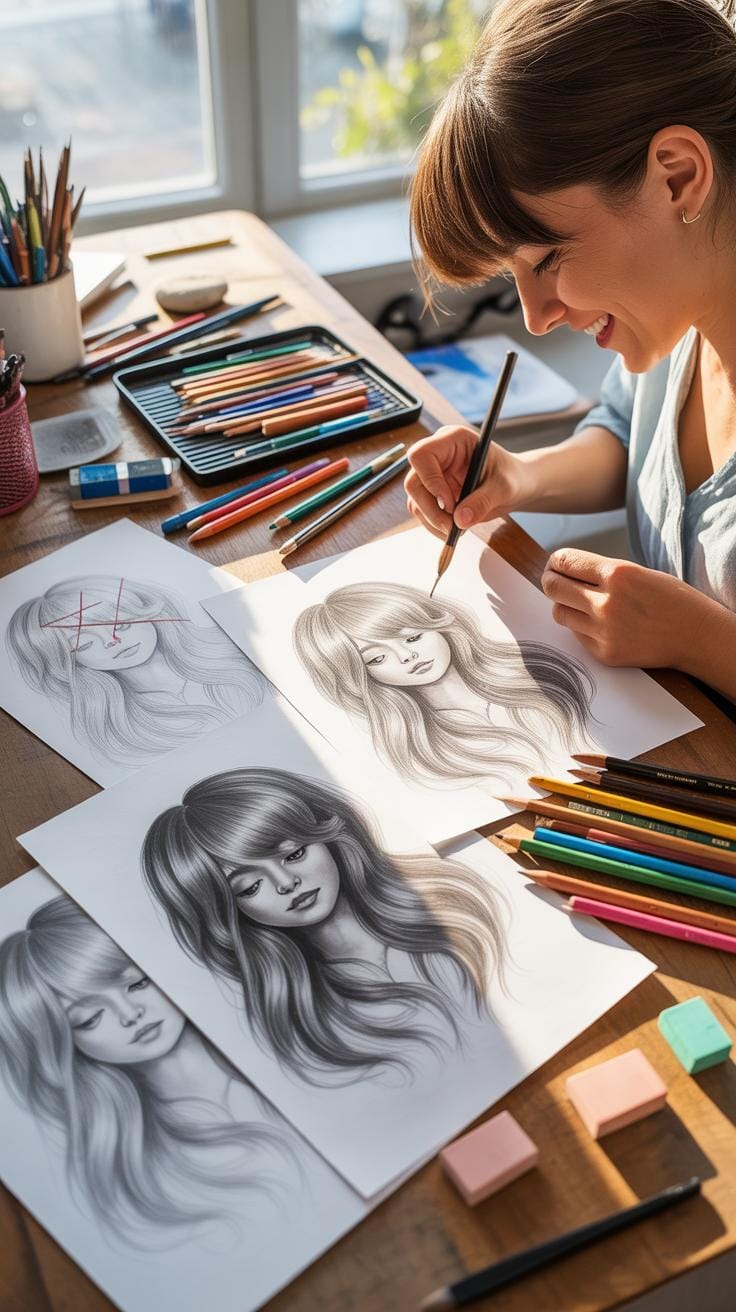
One of the most frequent pitfalls when drawing hair is treating it as a single solid block. Hair isn’t just a mass; it’s made up of countless individual strands with varying thickness and direction. If you draw hair as one uniform patch, it quickly appears flat and unrealistic. Instead, try focusing on capturing some separate strands or small groups, especially around the edges where hair naturally tapers. Highlights play a key role here too. They break up the mass and add dimension. Don’t be afraid to leave some areas lighter to suggest light catching on individual hairs. Even a few strokes that hint at texture can elevate your drawing from stiff to believable.
Consistent Stroke Directions Matter
Stroke direction might seem like a minor detail, but it has a major impact on how natural hair looks. Hair generally flows in a particular way based on the head’s shape and style. If your strokes zigzag unpredictably or go against this flow, the hair will appear messy or unnatural. Imagine a ponytail: strokes should curve smoothly from the scalp to the tip, not cut across randomly. Keeping your pencil or brush strokes aligned with hair growth helps build volume and structure. When you study real hair or good reference photos, notice how strokes guide your eye along the strands. Sometimes, consistency in stroke direction alone can transform a drawing.
Tools Versus Techniques In Hair Drawing
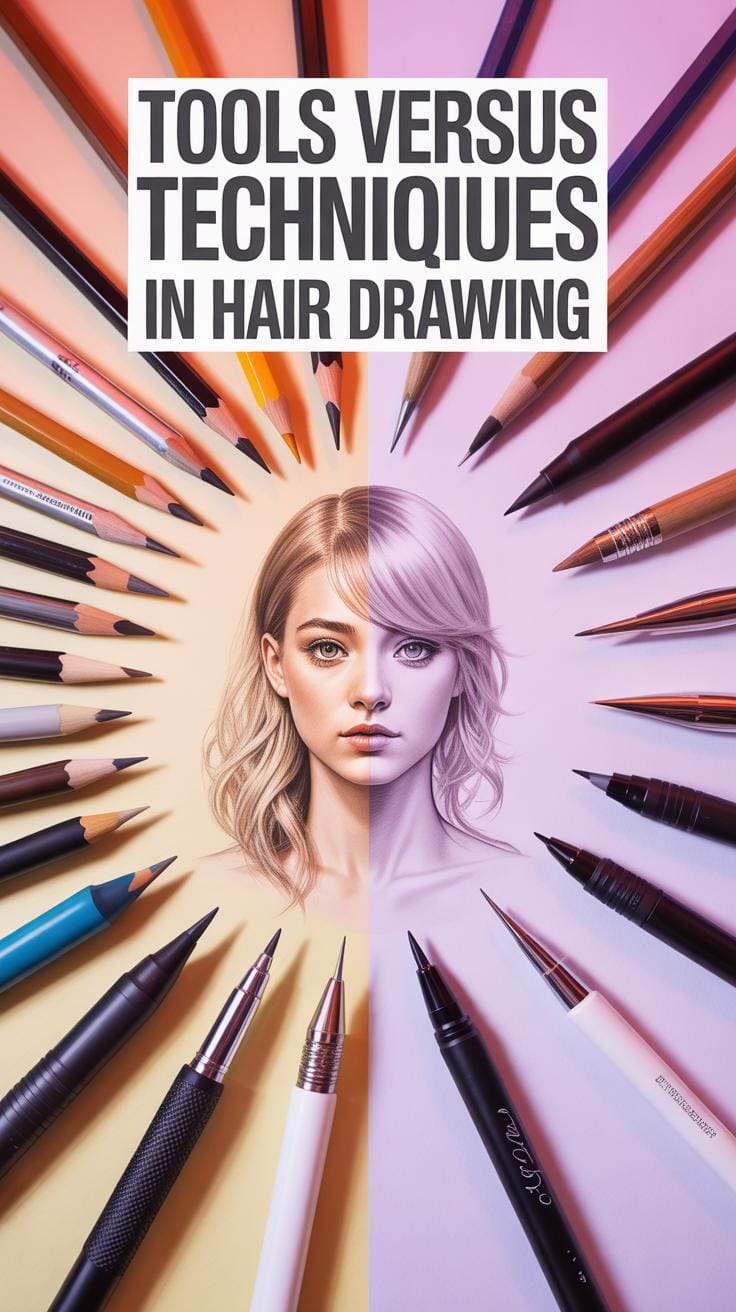

When it comes to achieving realism in hair drawing, both the tools you use and the techniques you apply matter. But if you ask me, the technique often plays the larger role. You could have the fanciest pencil or brush, but if you don’t understand how hair flows, how light interacts with strands, or the subtle texture differences, the results might still feel flat or artificial.
That said, tools do contribute. Different pencils, charcoal, or even digital brushes react uniquely on paper or screen, affecting your ability to capture softness or sharpness. Sometimes, switching from a hard graphite to a soft one helps create more natural shading. Yet, even with the best tools, the way you layer strokes, vary pressure, and observe real hair determines your success.
It’s a bit like learning to sing: an expensive microphone doesn’t make you a great vocalist. But once you’re skilled, a better mic might highlight nuances better. Drawing hair works similarly—you want a decent tool, but technique wins out in making the hair come alive.
When Tools Make A Difference
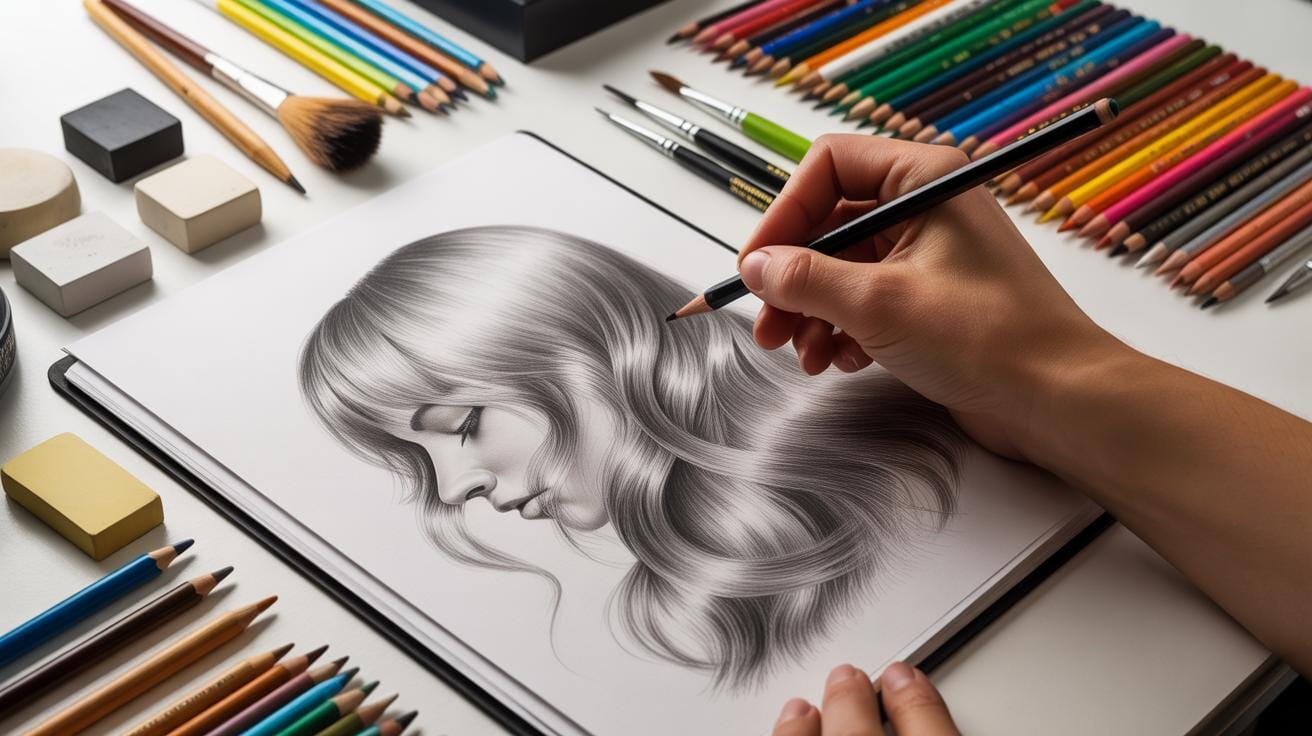
There are moments when tool quality really stands out, especially if you aim to portray specific hair textures. For example, capturing curly or frizzy hair might demand a variety of pencils and erasers to suggest volume and roughness. Tools like blending stumps or tortillons, when good quality, allow smoother transitions and finer detailing that can be tough with just basic equipment.
Also, if working digitally, the choice of brush can dramatically impact how strands appear. Some brushes mimic real hair textures almost convincingly, while cheaper or generic ones can produce blotchy or unrealistic lines. In these cases, the tool’s capabilities set a clear boundary on what you can achieve.

That said, these differences are often most noticeable to trained eyes or in highly detailed work. Early on, simple tools still let you practice fundamental skills effectively.
Mastering Techniques Over Tools
You might be tempted to invest in the latest, most expensive art supplies thinking it will instantly improve your hair drawings. I’ve been there, buying a premium sketchbook or pricey graphite sets hoping for a breakthrough. Yet, what really pushes your work forward is honing your technique.
Practice teaches you how hair behaves, how to layer strands realistically, and how to adjust pressure or line direction. These skills stay with you regardless of the tools. Even the cheapest pencils can produce impressive hair textures once your hand and eye are trained.
In fact, focusing too much on tools can be a distraction. It might foster a false belief that hardware alone will solve challenges. But the reality? It’s the hours spent observing, sketching, refining that develop genuine skill. So, if you must pick, put technique first. Tools are just support players in your artistic journey.
Layering And Shading For Hair
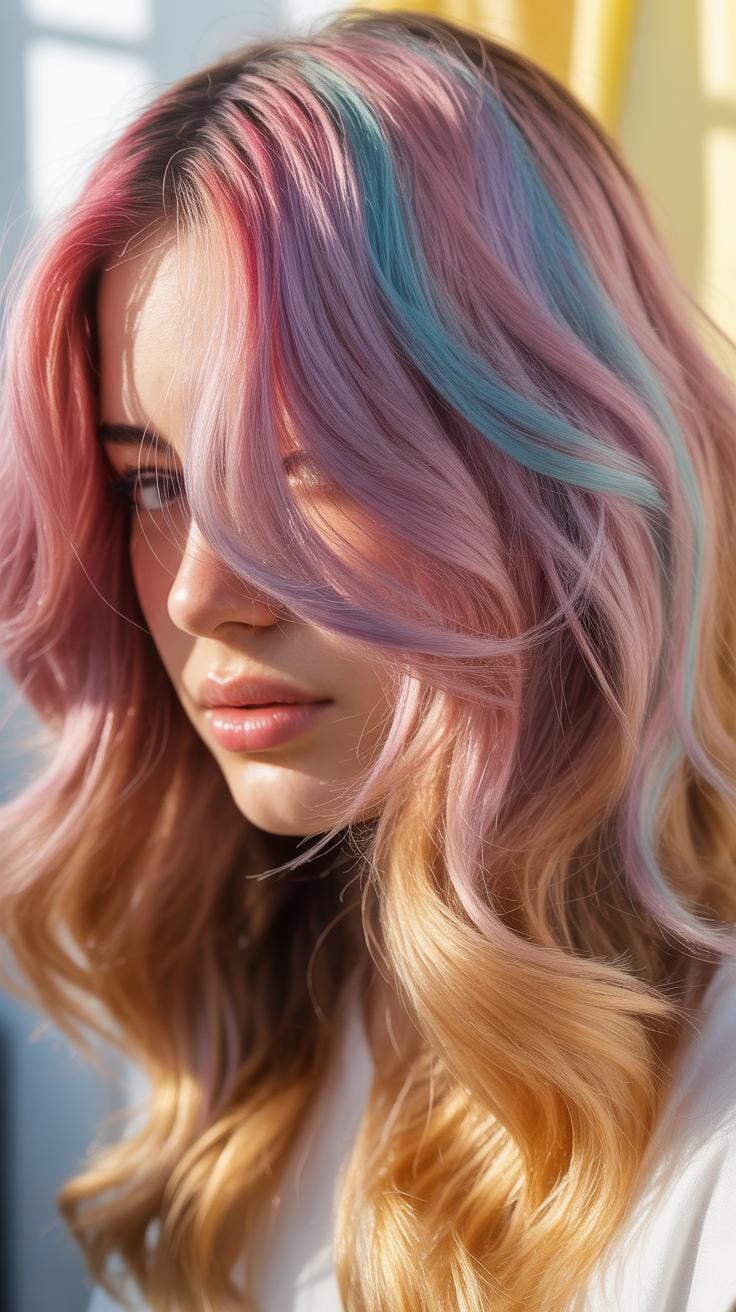

When drawing hair, layering and shading are what really bring it to life. It’s not just about filling a space with lines—it’s about giving those lines depth and volume that make the hair seem real, tangible. One technique that helps achieve this is careful control of pencil pressure. Press harder for darker strands or shadowed areas and lighten your touch for softer highlights or flyaway hairs. These subtle variations can mimic how light interacts with hair strands, creating a natural look.
Blending is another key step. It helps smooth out transitions between dark and light areas but be careful not to overdo it. You want to keep some texture to suggest individual hairs rather than a flat surface. Sometimes, blending with a tortillon or even a finger can do the trick, but each approach yields slightly different textures, so experiment a bit.
Creating highlights and shadows is the final touch that simulates 3D effects. Highlights often appear where the light source hits the hair directly, so leaving small areas nearly untouched by shading suggests that reflective shine. Conversely, adding shadows underneath layers or near roots deepens the perception of volume. It’s a balancing act, and sometimes you might feel unsure where to place these contrasts, but trust your eye and adjust repeatedly as you go.
Pressure Control And Layering
Changing pressure on your pencil isn’t just about going from dark to light; it’s about layering those pressures to build complexity. Start with lighter strokes and gradually increase pressure to deepen the shadows step by step instead of jumping straight to black. This way, your drawing grows in richness and looks more natural. I find that lightly layering different pencil grades, from hard to soft, can also add variety and realism.
Using Highlights And Shadows
To simulate light on hair strands, you need to observe where light naturally hits. Highlights usually form soft, elongated shapes along the curve of the hair strands, not just dots or lines. Use an eraser gently to lift graphite for these brighter spots if necessary. Shadows, on the other hand, are often near the roots, under overlapping layers, or behind the neck where light can’t reach well. The trick is to create enough contrast yet maintain smooth transitions so the hair doesn’t look patchy or artificial.
Practical Exercises For Hair Drawing
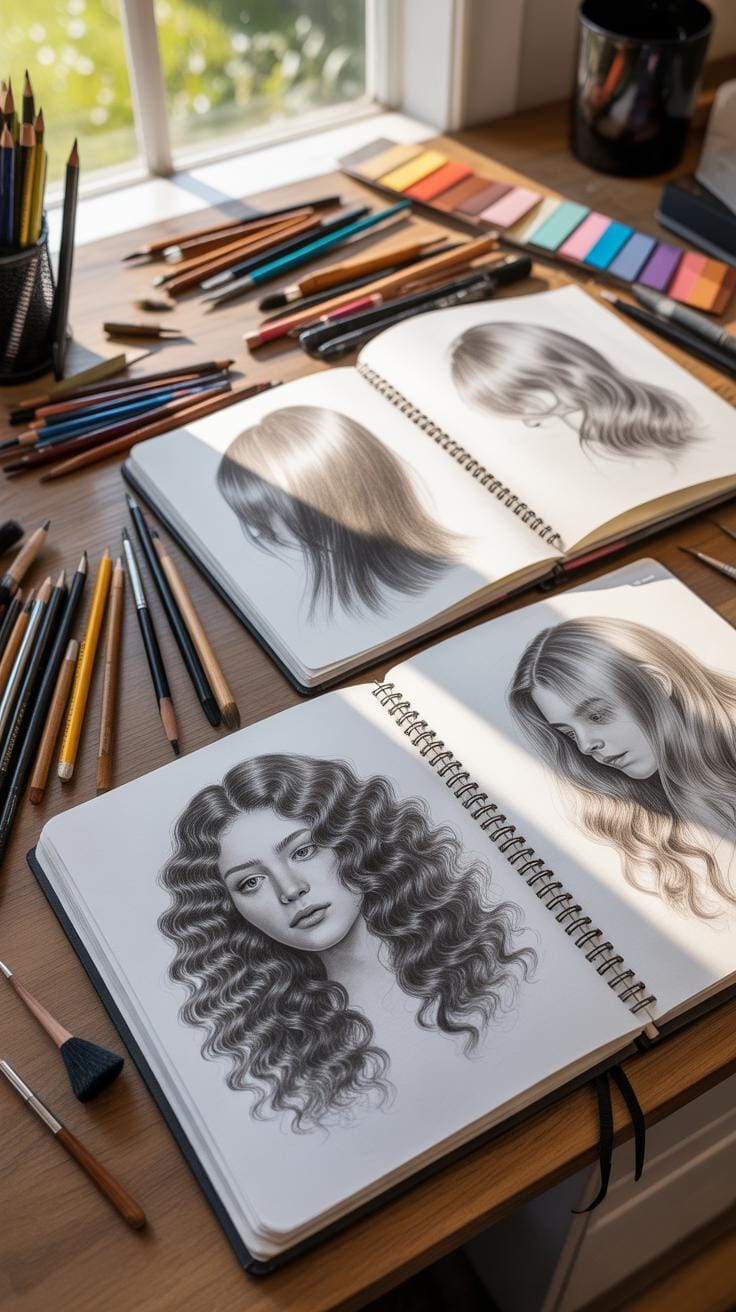

Drawing hair can feel tricky. But practice helps more than anything. One way is to pick hairstyle photos and try copying them exactly. Look closely at the way strands flow and overlap. Try to capture not just the shape but the texture. Sometimes, it’s odd how much slower you notice details when drawing than when just glancing at a photo. This can build your sense of accuracy and patience.
Another exercise is making strips of different hair textures—straight, wavy, curly—and practicing short strokes and shading on them. Consistency in strokes matters more than you might think. It’s about repetition, really, to get comfortable with how hair behaves visually. Don’t rush the shading. Play with pressure to see what works best for each texture.
- Choose real photos with varied styles for copying practice.
- Create strips focusing on one type of texture at a time.
- Repeat strokes to build muscle memory and flow understanding.
It seems basic, but these steady studies offer surprising progress. You might question if you’re improving too slowly, but keep at it. The nuances of hair matter, and practice sharpens your eye in ways that casual sketching doesn’t quite reach.
How To Fix Hair Drawing Errors
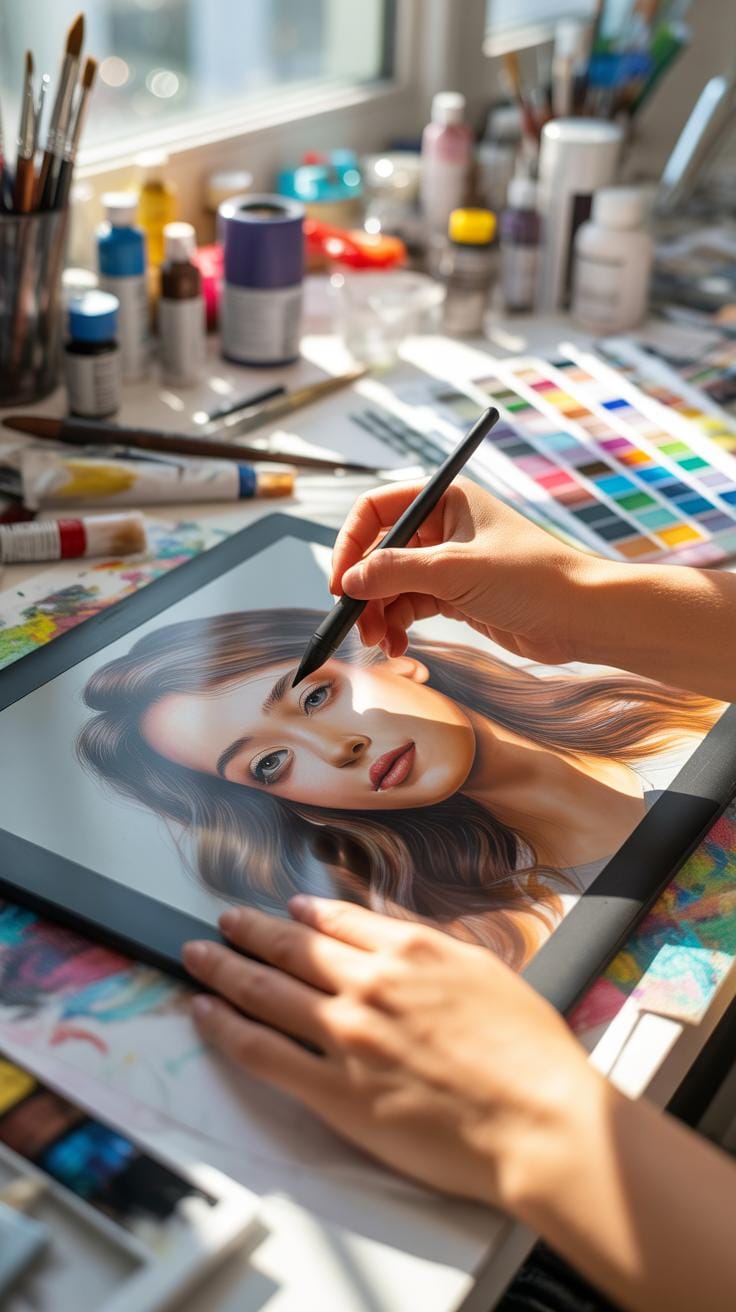
Drawing hair can be tricky, and it’s easy to make mistakes that throw off the whole look. Maybe the strands look too stiff, or the direction feels off. The first step is learning to spot these errors early on. Sometimes, the hair might look flat because the flow is too uniform, or it appears patchy due to uneven shading.

When you notice an error, you don’t have to start over. Try erasing gently with a kneaded eraser to lift graphite without damaging the paper. This lets you adjust highlights or lighten areas that became too dark. Re-layering is key—build up strands gradually, rather than pressing hard from the start. You can revisit strokes multiple times; hair isn’t perfect in real life, so slight corrections add a natural feel. Just watch out for smudging. Using a clean sheet under your hand can reduce unwanted marks while you refine your drawing.
Sometimes, instead of erasing completely, soften harsh lines by lightly blending or redrawing over them with a softer touch. This way, you keep the texture without losing your original work. Fixing hair drawing errors isn’t about precision alone but patience and gentle adjustments that keep the drawing alive.
Examples Of Finished Hair Drawings
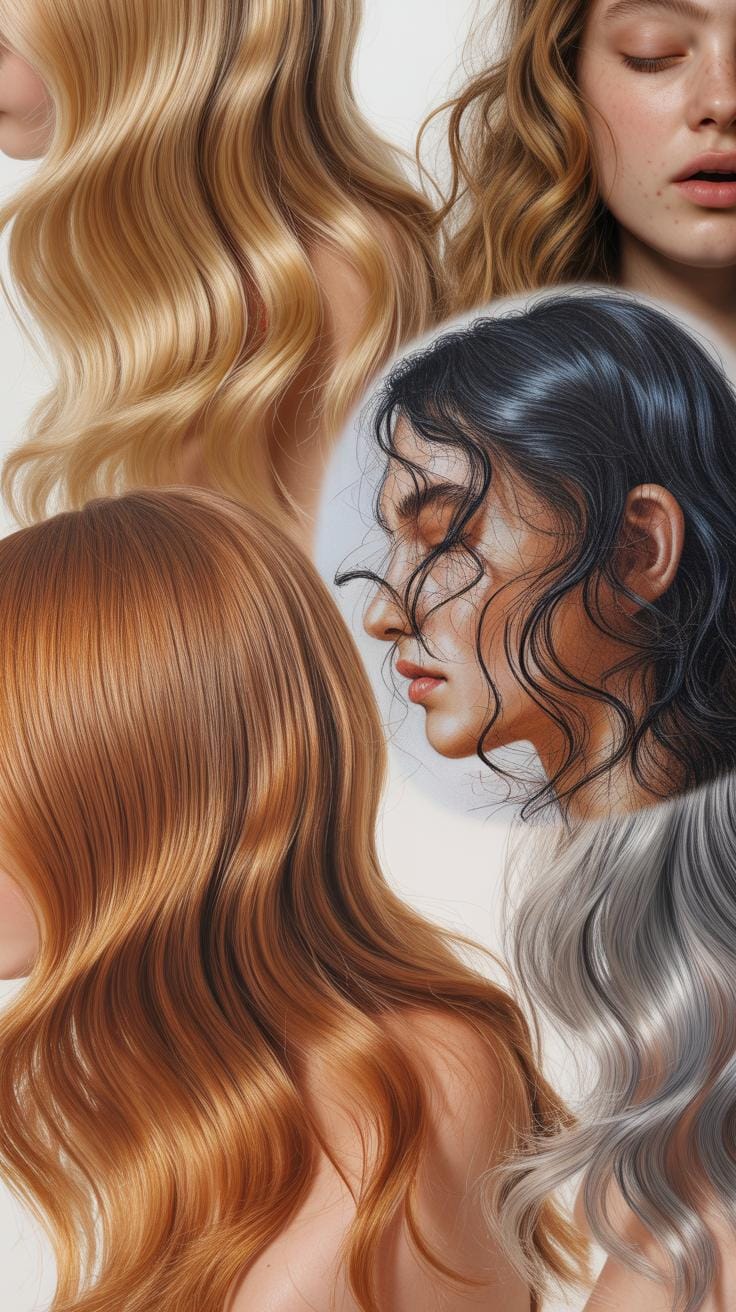
When looking at finished hair drawings, you can’t help but notice the variety in texture that artists bring to life. Some examples display silky, straight hair that flows smoothly with light reflections guiding your eye. Others capture the wild bounce of curls, each loop distinct yet harmonized into a dynamic mass. Success often hinges on the attention to subtle variations—shadows, highlights, and the irregular spacing of strands. You might find a drawing where the strands are not uniform, which oddly makes the hair feel more natural. It’s less about precision and more about capturing the essence of hair’s unpredictability. Depth comes from layering pencil strokes, using different hardnesses for soft shadows versus sharp strands.
Style also plays a role. In some drawings, you’ll notice loose sketchy lines that suggest quick movement, almost like capturing the moment hair was tousled by the wind. Elsewhere, meticulous crosshatching or blending forms smoother transitions, perfect for denser hair. Those successful examples don’t shy away from embracing imperfection—they reflect how hair naturally behaves. What draws you into a realistic hair portrait? Often it’s the interplay between light, shadow, and subtle texture.
Case Study Of Realistic Long Hair Drawing
Let’s consider a drawing of long, straight hair. The artist begins with a light outline, loosely indicating the main shapes and flow. Using a hard pencil (like an H or 2H), they sketch the general direction of strands, focusing on flow rather than detail. Next, layering softer pencils (such as B or 2B) adds depth and shadow where hair overlaps or clumps together.
Blending tools, like a blending stump or tissue, soften these shadows. It’s tempting to smooth everything out, but leaving some sharp lines is crucial for texture. Highlights get left white or are gently lifted with a kneaded eraser, especially along the hair’s natural shine points. This technique gives the hair volume without turning it flat. The key takeaway is patience—the artist returns repeatedly to add fine strokes, layering each time to build complexity and volume. Tools vary, but a mix of hard and soft pencils, blending tools, and erasers work well together.
Example Of Curly Hair Drawing
Curly hair can be tricky. The unpredictability and volume of curls means artists often struggle to balance detail with overall shape. One impressive approach starts by blocking out the large masses of curl clusters with a soft pencil, shading in for volume rather than individual strands. This avoids overwhelming detail and focuses on overall form.
After defining the major shapes, the artist adds the unique spirals and curls with tighter, quicker strokes. Using a finer mechanical pencil or a sharpened pencil can help create those delicate loops. Shadows fall inside the curls, enhancing depth, while highlights catch the light bouncing from different directions.
The biggest challenge? Rendering volume without making the drawing dense or flat. Layering and selective shading—sometimes leaving spaces between curls—help maintain a lightness. It’s a back and forth process, constantly adjusting contrast and contour to capture the lively texture of curls. The balance between control and randomness makes curly hair drawings compelling. If you ever feel stuck drawing curls, try this layered, shape-first approach before diving into individual strands.
Conclusions
Drawing hair involves understanding its structure and using the right tools effectively. With practice and the methods discussed, you can capture the flow and texture of hair in your art. The choice of tools and following a structured process is crucial for achieving realistic results.
Remember to observe hair closely, practice consistently, and refine your strokes. By applying these techniques, your hair drawings will look more lifelike and detailed, adding depth to your portraits and character sketches.