

Charcoal vs. Graphite for Home Decor Art
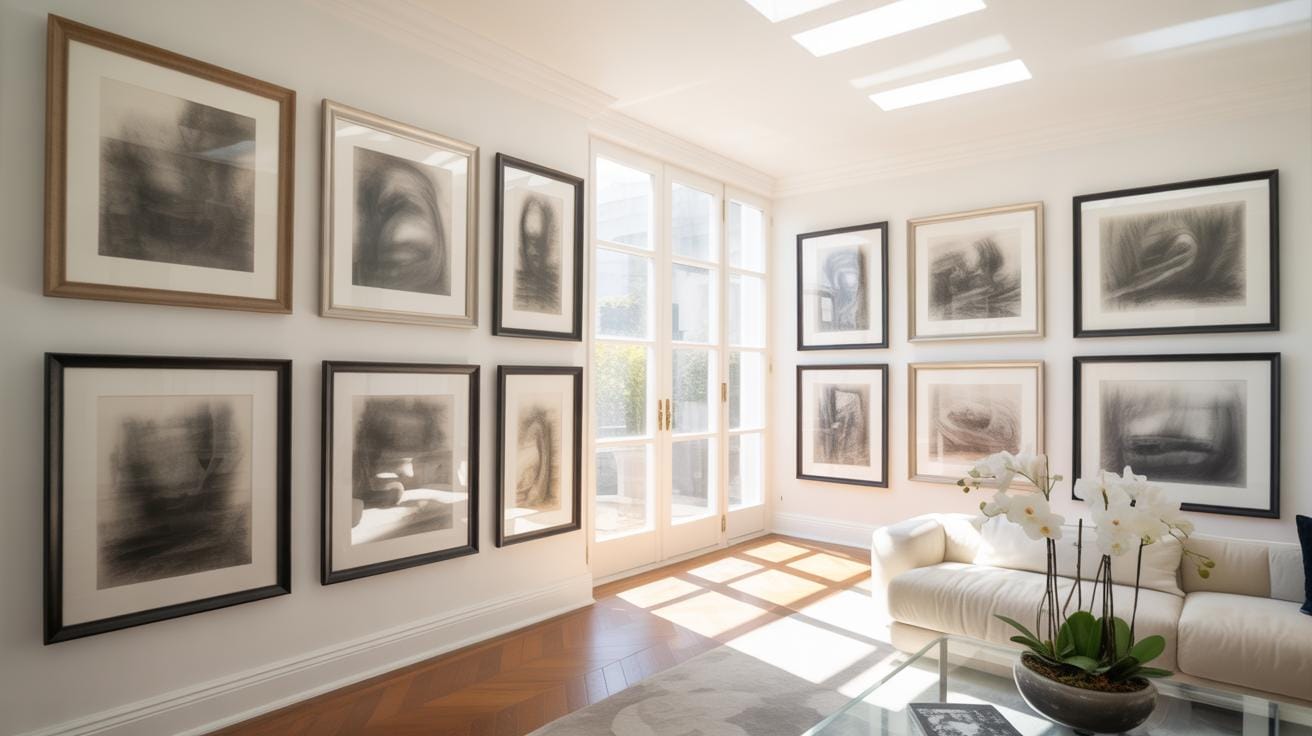
Charcoal drawings and graphite art are popular choices for adding stunning artwork to your home decor. Both mediums create beautiful black-and-white images, but they have different qualities that make each special. This article compares charcoal drawings and graphite art so you can decide which fits your space best.
You will learn what makes charcoal unique and how graphite pencils differ. This article also covers the materials used, techniques, maintenance tips, and ideas for displaying both types of artwork at home. Whether you want a bold, dramatic piece or a soft, detailed sketch, understanding these differences helps you choose stunning art for your walls.
Choosing Between Charcoal And Graphite
Key Differences In Charcoal Drawings
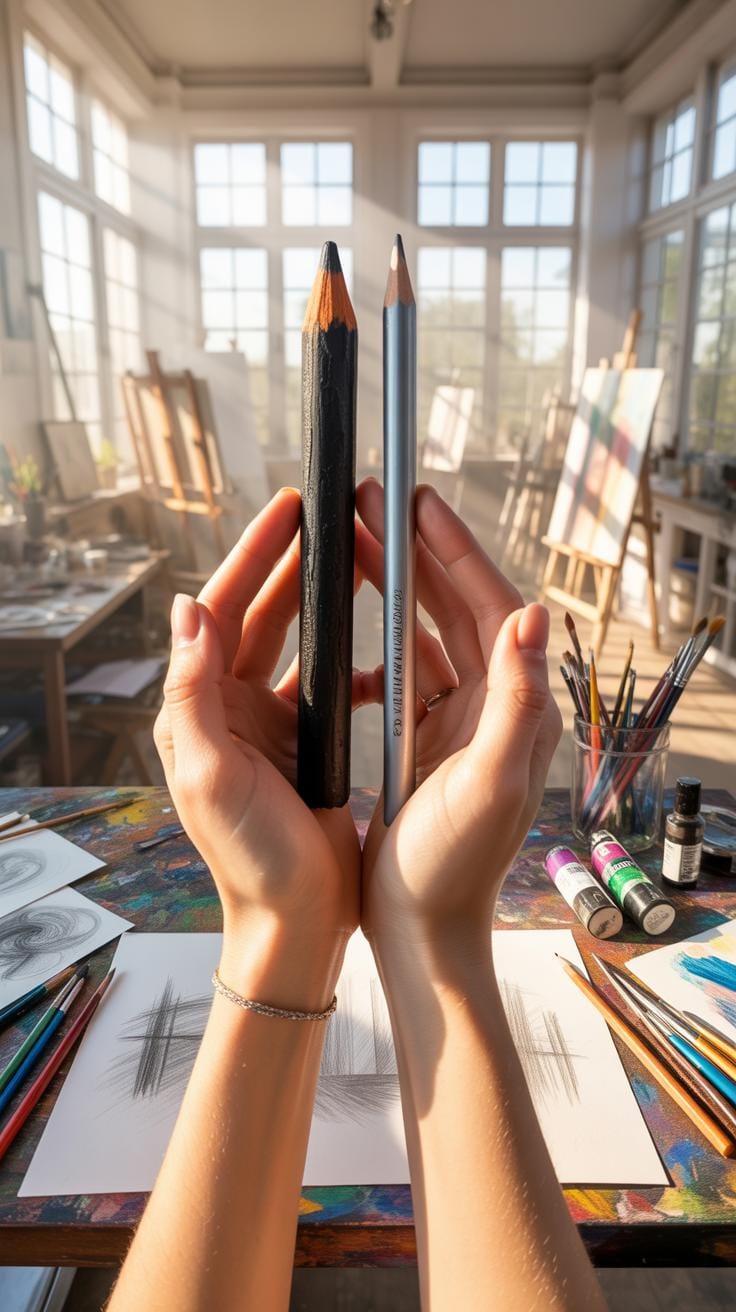
Charcoal drawings often command attention with their rich, velvety blacks and a raw, expressive quality. The medium itself comes primarily in three forms: compressed charcoal, vine charcoal, and willow charcoal. Compressed charcoal is dense and dark, made by mixing charcoal powder with a binder like gum or wax, which lets artists craft intensely bold marks or softer grays depending on the hardness of the stick. Vine and willow charcoals are lighter and more friable, created by burning grapevine or willow branches in limited oxygen. These tend to leave a powdery, subtle mark on the paper, great for sketches or softer shading but less suited for detailed line work.
The texture charcoal provides is quite unique. It sits on the paper surface more visibly than pencil graphite, giving a tactile sense of depth and moodiness. The roughness of the paper often grabs the charcoal particles unevenly, producing a grainy, almost smoky effect that pencil marks rarely match. Unlike graphite, charcoal lines can be heavily blended or lifted off with erasers, adding a dynamic range and flexibility to your work. I’ve noticed that the charcoal’s rich darkness often feels more alive, but it also smudges more easily, so it requires careful fixing or handling.
Graphite Art Characteristics
Graphite drawing, on the other hand, revolves around pencils made from a mixture of graphite and clay. The ratio between these two determines whether the lead is hard or soft. Harder leads (H grades) produce lighter, finer lines suitable for technical drawings and precise details, while softer leads (B grades) are darker and better for expressive shading. Graphite lays down more smoothly, with a shiny, reflective surface that can catch light differently than charcoal.

The versatility of graphite pencils is notable; you can move from detailed rendering to soft gradients with a single tool, but it lacks the textural grit of charcoal. Graphite tends to embed more into the paper, making it less prone to smudging, but also a bit less dramatic in contrast. When artists select between graphite and charcoal, they’re often weighing these differences—whether they want the subtlety and control of graphite or the bold depth and texture that charcoal offers. Sometimes, the choice hinges on the emotion the piece intends to convey or simply the artist’s comfort with each medium.
Tools Needed For Charcoal Drawing
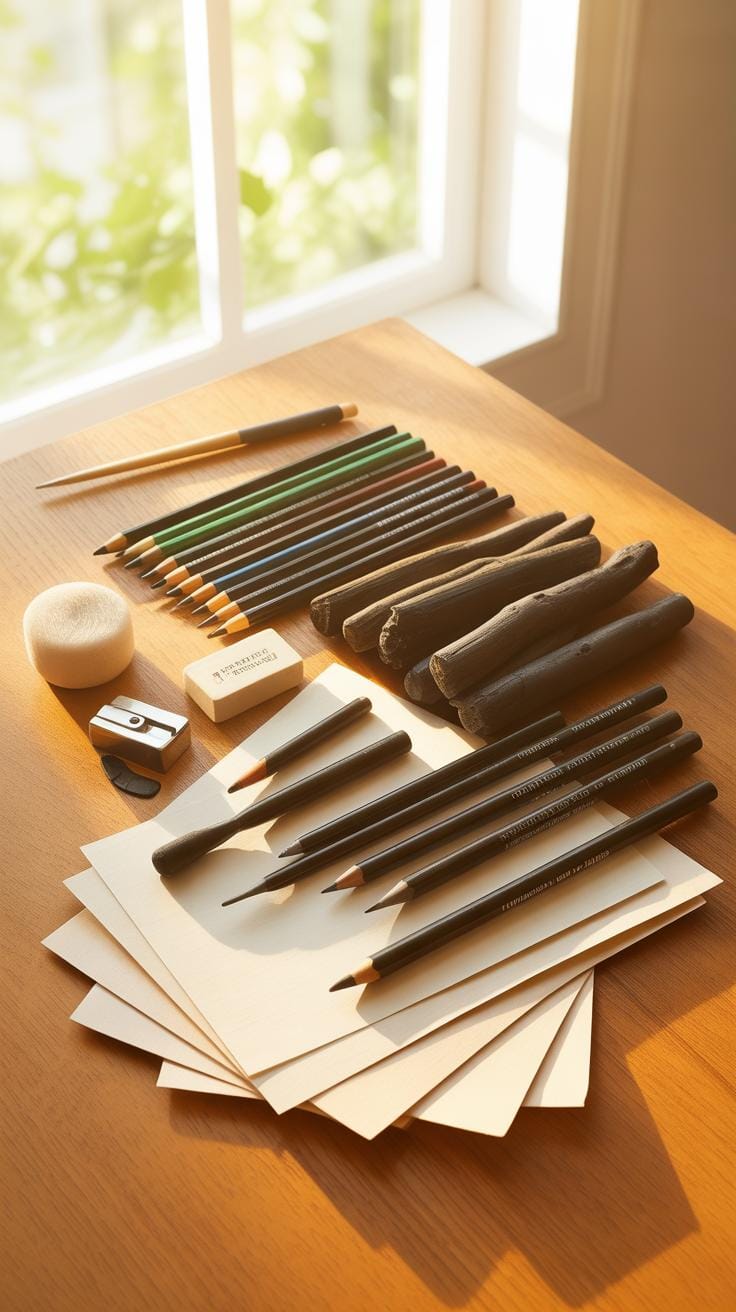
When you start with charcoal drawing, knowing your tools is key. Charcoal comes in a few main types: compressed, vine, and pencil. Each has a distinct texture and hardness. Compressed charcoal is dense, making deep, dark marks ideal for bold strokes but it’s less easy to blend. Vine charcoal is softer, great for shading and sketches, with shades ranging light to medium gray. Charcoal pencils provide precision for fine details and keep your fingers cleaner.
Paper choice impacts your charcoal work a lot. Textured or rough paper grabs more charcoal, giving richer tones and depth, while smooth papers suit sharper lines. Toned paper adds interesting effects when combined with white chalk or pastels.
Don’t forget erasers! Kneaded erasers are a favorite—they lift charcoal without damaging paper and can be shaped to erase tiny spots. Fixatives are crucial if you want your drawing to last. They spray a protective layer that prevents smudging and dust loss but can alter texture slightly.

Choosing the right combination of these tools matters. You might experiment with different papers or charcoal types to see what feels right. It’s not just about the tools themselves but how you use them that brings your charcoal art to life.
Charcoal Drawings

Charcoal drawing is a tactile experience that invites you to engage with your materials in a way graphite rarely does. The tools feel raw—charcoal sticks or pencils—offering a rich, velvety black that’s difficult to rival. The nature of charcoal means your marks are often bold and expressive, lending themselves well to dramatic contrasts and moody atmospheres.
When working with charcoal, you don’t just draw—you smudge, erase, and rework constantly. The dusty, powdery quality lets you create textures or soft gradients simply by blending with fingers or stumps. But there’s a flip side: it’s delicate and prone to smearing, so setting up a protected workspace and using fixative sprays becomes necessary if you want to preserve your work.
Choosing the paper matters a lot. Rougher, textured papers grab onto the charcoal particles better, which helps with layering and depth. You might find yourself reaching for heavier weight papers too, since charcoal tends to be a bit messier and can wear through thinner sheets. It’s almost like charcoal has a personality—while graphite slips smoothly over paper, charcoal demands a tactile, sometimes unpredictable collaboration.

In my experience, charcoal suits artists who enjoy embracing spontaneity in their work. The marks can shift with every touch, and sometimes that’s frustrating. But it’s also what makes charcoal so alive. Are you looking for precision or mood? Charcoal leans towards the latter, making your drawing space more about exploration than perfection.
Basic Techniques In Charcoal Drawing
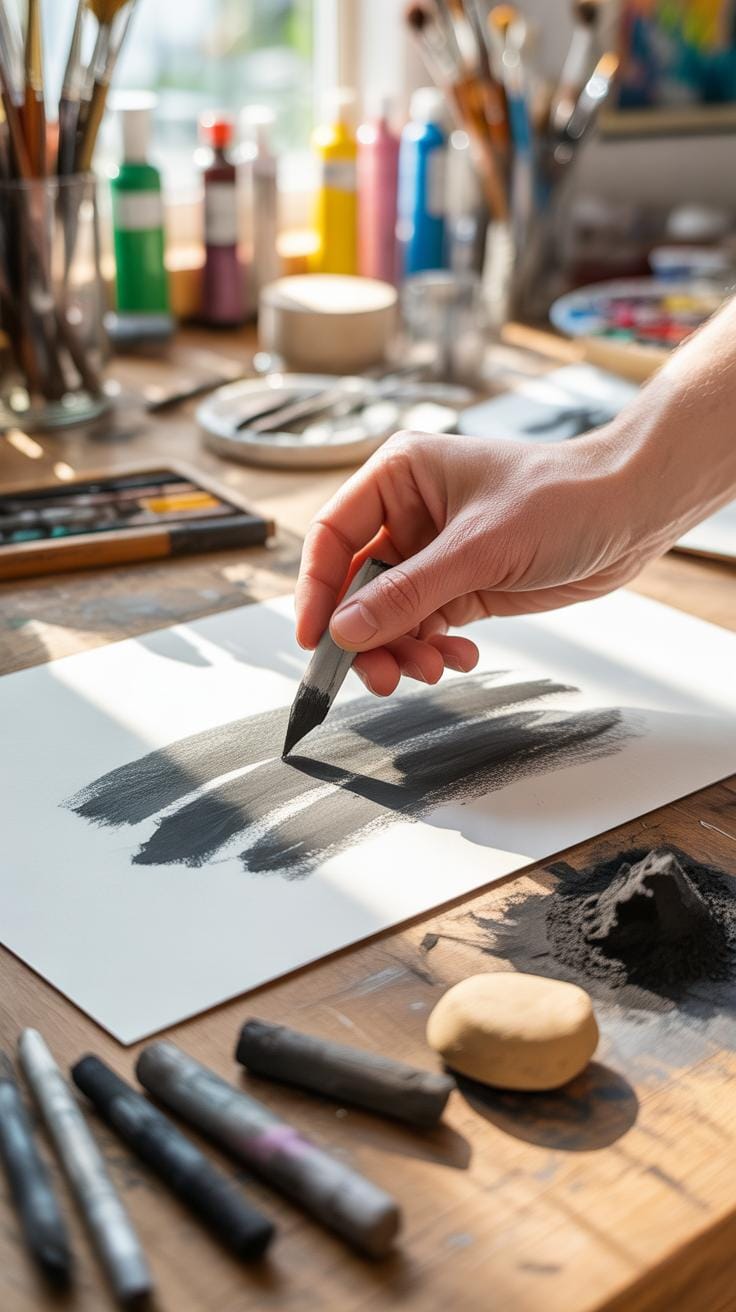
Charcoal drawing starts with mastering a few fundamental techniques that shape texture and tone in unique ways. One important practice is layering: by gradually building up charcoal in thin layers, you can control the depth and darkness of your marks. Sometimes a single swipe feels too harsh, but layers allow more subtlety in shading.
Blending is key for smooth tonal shifts. Artists often use fingers, soft cloth, or specialized tools like blending stumps to gently smudge the charcoal, removing harsh edges and creating gentle gradients. It’s interesting how a simple finger swipe can transform a piece — though, admittedly, it’s not always precise.
Hatching, the repetition of thin parallel lines, also plays a pivotal role. It adds texture and can suggest volume or shadow, but unlike graphite, charcoal’s softer nature makes these lines appear richer yet slightly more diffuse.

Erasing is equally vital; using a kneaded eraser, which can be shaped precisely, artists lift charcoal off the surface to create highlights or refine details. This selective subtraction is almost like ‘drawing with light,’ offering a delicate balance between addition and removal.
All these techniques interlace to bring charcoal drawings to life, offering you a wide tactile range—from rough textured areas to velvety smoothness that might just captivate a room as part of your decor.
Charcoal Drawings
Charcoal drawing has a unique appeal that’s different from graphite. The medium offers a range of textures and blacks that can vary from soft and subtle to deep and intense. There are different types of charcoal — vine, willow, compressed, and pencil — each with its own character and uses. For instance, vine and willow charcoal provide a softer, lighter touch, perfect for sketching or initial compositions where erasures and adjustments are common.
Compressed charcoal, on the other hand, offers a denser, darker black. Its hardness can be adjusted during production, influencing how bold or subtle the strokes appear. Interestingly, charcoal’s marks can be easily blended or lifted with erasers, which gives artists a lot of control in creating depth and gradients. Using blending tools such as fingers, paper stumps, or even soft leather adds a tactile dimension to charcoal art that’s hard to match.
One challenge, I think, is its impermanence. Without fixatives, charcoal dust can smudge or fade over time, which might complicate framing or display if you’re not careful. Still, this fragility allows for dynamic, expressive strokes that seem almost spontaneous. It’s maybe this raw quality that makes charcoal drawings captivating for home decor—there’s a kind of life and movement frozen on the page.

Have you ever noticed how charcoal captures shadows and light differently? Because it can go from whisper-light grays to pitch-black with the same tool, it blends emotion and form in a way graphite sometimes struggles to do.
Maintaining Charcoal Artwork At Home
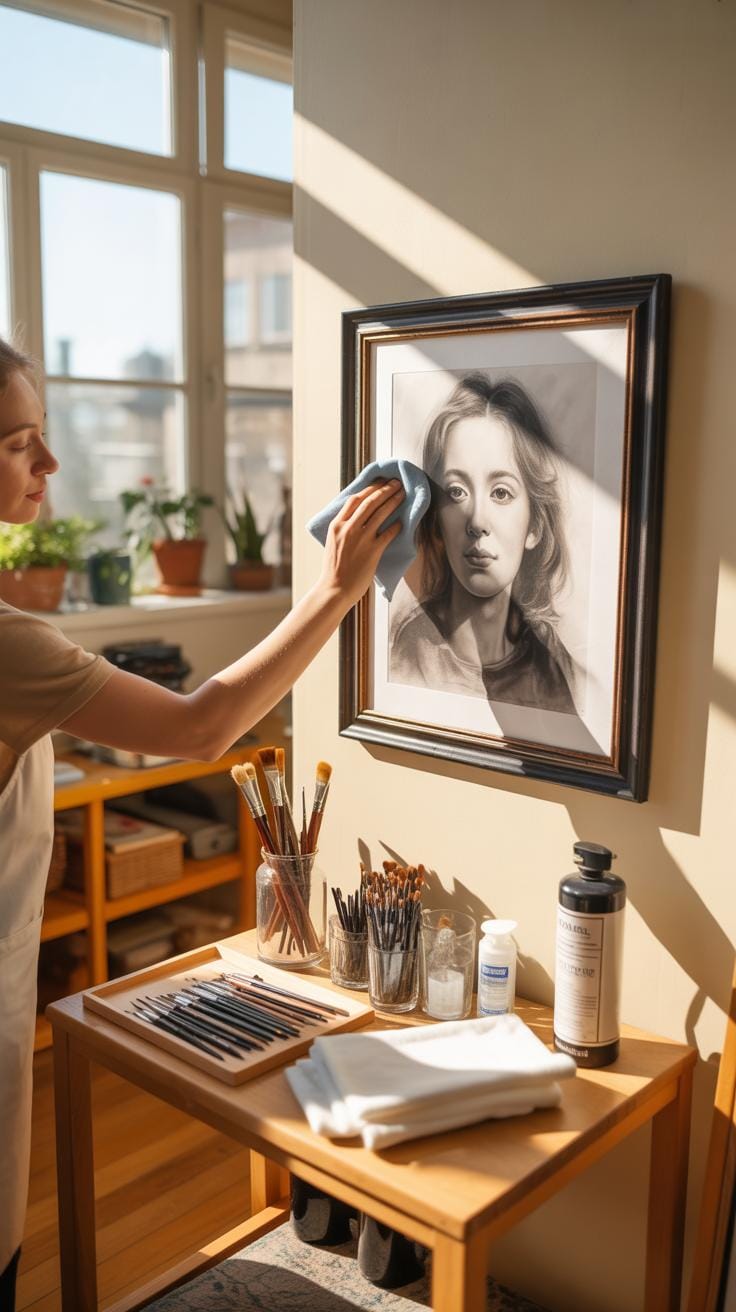
Charcoal drawings have a tendency to smudge easily, which can make their maintenance quite tricky. When you bring charcoal art into your home, the first step is to protect the surface. Framing the artwork behind glass is essential—it acts like a shield against dust, accidental touches, and environmental factors that might degrade the drawing. But not just any glass will do; you might want to opt for UV-protective glass to prevent fading over time.
Moisture is another enemy. The porous nature of charcoal means that humidity can cause the particles to blur or stick. So keeping humidity low and avoiding places like bathrooms or kitchens for display is a cautious move. If smudges do appear, the cleaning process requires a delicate hand. Try using a soft eraser gently to lift marks, never press hard or use water, as it will ruin the texture.
Protecting Drawings With Fixatives
Fixatives are lifesavers for charcoal artists and collectors alike. They work by bonding the charcoal particles lightly to the paper without drowning the texture you spent time creating. Spraying fixatives should be done sparingly—ideally outdoors or in a well-ventilated room. Hold the can at least 12 inches away and apply several light coats rather than one heavy layer. It’s tempting to overdo it, but that can darken the drawing or change its appeal.

Fixatives don’t completely immunize your charcoal work from damage but instead reduce the risk of charcoal loss. If you skip this step, you might find your precious art smudged or faded more quickly than you’d like. Some artists say fixatives can slightly dull the intense blacks, which might not align with your aesthetic preference. So consider testing on a scrap piece first.
Framing And Display Tips
Choosing the right frame is not only about style but also about preservation. Use acid-free mats to prevent yellowing of the paper, and make sure there is space between the glass and the drawing to avoid sticking. Float frames are popular—they showcase the drawing almost as if it’s suspended without direct contact with the glass. This method provides protection and a clean, minimalist look.
Glass types matter. Non-reflective glass reduces glare, which helps viewers appreciate the fine details of charcoal textures without visual distractions. On the other hand, standard glass is affordable but might cause reflections that compete with the artwork’s subtle shades.
Displaying charcoal drawings is about balancing protection and presentation. Your choices in framing materials, placement, and protective measures can all help preserve the mood and depth unique to charcoal art.
Charcoal Drawings
Charcoal drawings hold a unique place in the world of art and home decor, offering a raw and expressive quality that’s hard to replicate. What I find intriguing—and perhaps you will too—is how charcoal’s texture varies with different types like vine, willow, or compressed charcoal. Each delivers its own shade, from soft grays to deep blacks.

One challenge with charcoal is its permanence—or rather, the lack of it. Charcoal marks are quite delicate; they can easily smudge or fade without proper care. Unlike graphite, which is relatively stable, charcoal dust can come off, meaning that handling and displaying these artworks calls for some thought.
Many artists use fixatives to wrestle charcoal into place, but even then, it’s a balance. You may find that the paper’s texture plays a huge role—rougher papers hold more charcoal but also feel more vulnerable. Blending and erasing add another layer of complexity, giving charcoal a dynamic range but requiring care to avoid unintended smears.
When it comes to framing charcoal pieces, glass or acrylic glazing is almost mandatory to protect against dust and accidental rubbing. Yet, the frame can’t be too tight or the drawing might get crushed. Placing the artwork away from direct sunlight reduces fading, but it’s a bit tricky since some light is essential to appreciate the subtle shifts in tone.
So, when choosing charcoal art for your walls, consider its fragile beauty. These drawings invite you to look closer, appreciate nuance, and perhaps occasionally retouch or preserve them with care. They’re not the “set it and forget it” type of decor, which can be—depending on how you see it—a part of their charm.
Comparing Visual Effects Of Both Mediums
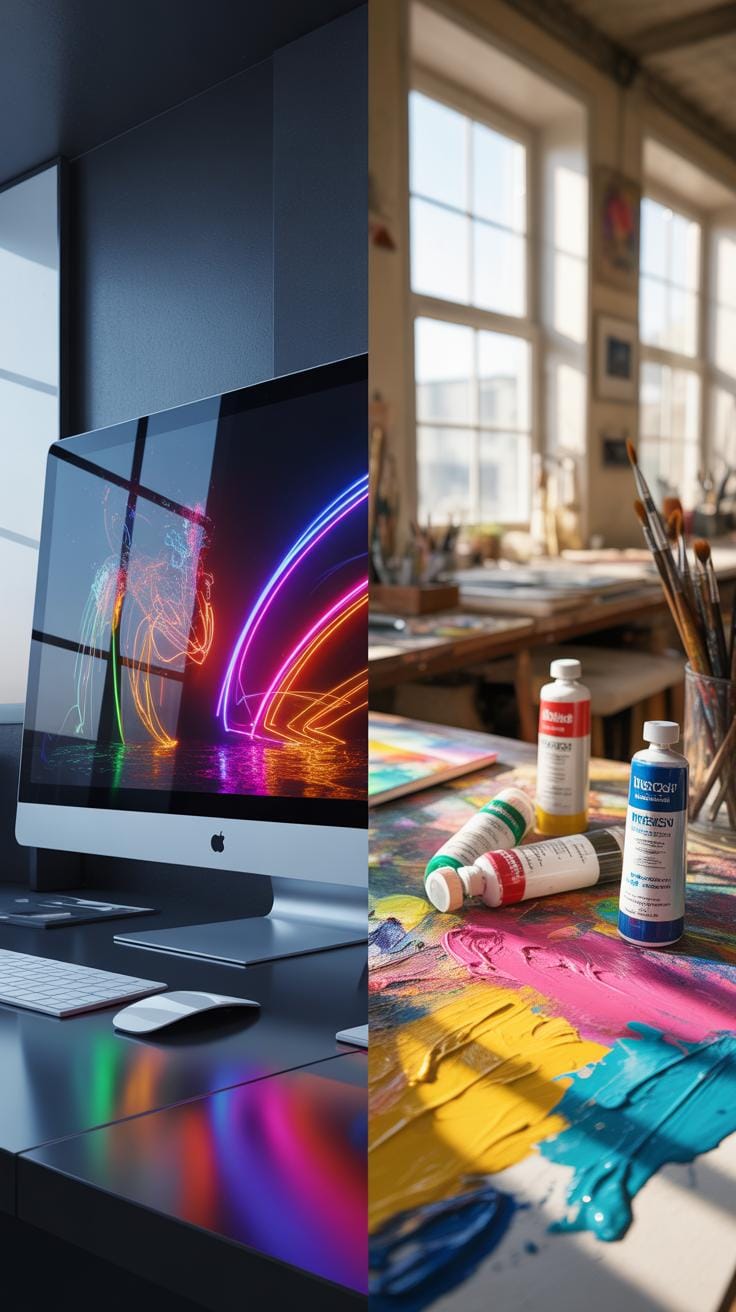

Charcoal drawings bring something quite distinct to the table when it comes to home decor. You notice the richness first—a deep, velvety black that almost seems to absorb light rather than reflect it. The texture is rougher, more tactile; you can sense the graininess that gives it a raw, almost unfinished look. It’s like the drawing has its own voice, loud and assertive, not afraid to make a statement. For settings like urban lofts or industrial-style rooms, charcoal works brilliantly. It’s bold enough to stand out against exposed brick or metal, creating a dramatic focal point.
By contrast, graphite offers a smoother, cleaner aesthetic. Its lines are precise, almost clinical in their clarity, yet capable of conveying subtle gradations that build a soft and elegant atmosphere. Graphite is less about shouting and more about whispering—perfect for minimalist spaces or classic interiors where understated detail is key. Imagine a serene grayscale portrait hanging in a bright white room; it adds just enough texture and interest without overwhelming the calm vibe.
Thinking about where to place these? Charcoal fits those rooms that want to grab attention—modern, perhaps a bit edgy. Graphite suits peaceful, orderly environments that benefit from refined accents. But maybe the choice isn’t that simple. Sometimes, you want both contrast and calm, tension and ease, all in one home.
When To Choose Charcoal Over Graphite
Art Style And Texture Preferences
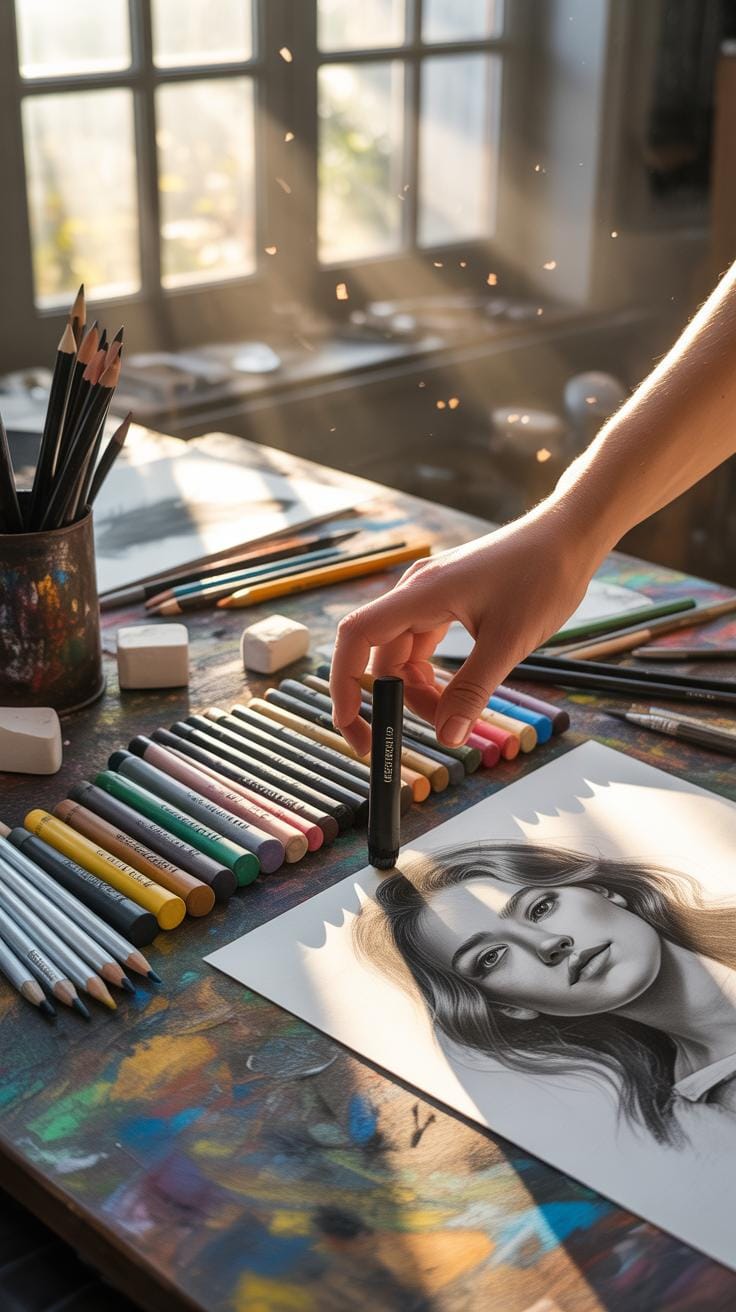
Charcoal drawings bring a certain rough energy to a space. If you’re after deep blacks and a textured, almost tactile surface, charcoal might be the choice for you. The marks are less precise, more organic sometimes — it’s not about clean lines but a more expressive, raw feeling. You might find that charcoal’s softer gradations and the way it smudges and blends adds a depth you don’t get with graphite’s smoother, shinier finish.
Think of charcoal like a moodier, more dramatic sibling. It thrives when you want something bold, even a bit gritty. Its unique ability to show intense blacks alongside subtle grays creates a visual impact that feels alive and shifting. When a dynamic or somewhat untamed vibe is your goal, charcoal could be the right pick.
Durability And Care Considerations
That richness and texture come at a cost. Charcoal is fragile. It can smudge easily and dust off onto your hands or the surrounding surfaces. So, if you go for charcoal art, consider the framing and placing carefully. Glass covering with spacers works well to keep dust and fingers off the surface and preserves it from accidental smudges.
Further, the environment matters. Excessive humidity or direct sunlight can affect charcoal’s appearance, so you’ll want a stable, dry spot away from sunlit areas. It’s not the most maintenance-free option, for sure. But if you’re willing to handle it with a bit more care, the payoff can be that dramatic visual punch you might not get otherwise.
Charcoal Drawings
Charcoal drawings have a distinct presence that can bring a certain texture and depth to your home decor that other mediums might struggle with. The nature of charcoal as a medium—it’s less permanent and easily blendable—means you get these rich, velvety blacks that contrast with softer grays. This quality lets artists emphasize shadows and light in a way that feels organic, sometimes a bit raw. I think that unpredictability adds character.
When you think about where to place charcoal art, consider rooms that benefit from this tactile quality—a study, a living room with earthy tones, or an industrial setting with exposed materials. It’s interesting, isn’t it? Because charcoal’s dark lines and smoky gradients interact with textured walls or even rough wood really well. It’s almost like the drawing carries some of that physical texture with it.
Then there’s the matter of preservation. Charcoal isn’t as permanent as graphite. You might want to use fixatives to prevent smudging, especially in high-traffic areas. Frames with glass are a must, not just for aesthetics but to protect the artwork. I suppose it’s a bit of a balancing act—showcasing charcoal’s depth while keeping it stable over time.
In terms of style, charcoal fits with spaces that embrace imperfection or a handcrafted vibe. It’s less about crisp lines and more about mood and atmosphere. Maybe that’s why some people shy away—it feels less controlled, more vulnerable. But that, to me, is where its charm lies.
Conclusions
Charcoal drawings offer bold lines and deep blacks, while graphite art shines in fine detail and smooth shading. Each medium brings a different style and texture to your home decor. Your choice depends on whether you prefer dramatic contrast or delicate gradations in your artwork.
Both charcoal and graphite art pieces require care to maintain their appearance. With the right materials, techniques, and display methods, either option can add a striking and elegant touch to your living space.